daily

2026-10-01
1

Wexford applications for ‘Support for Sport’

Wexford Local · original → · 8/10 · Local Wexford: sports funding initiative for county clubs
[image →]Former Irish rugby international, Donncha O’Callaghan has launched the sixth Texaco Support for Sport funding initiative. Now open to sports clubs across Ireland, a fund of €130,000 will be…
[image →]
Former Irish rugby international, Donncha O’Callaghan has launched the sixth Texaco Support for Sport funding initiative. Now open to sports clubs across Ireland, a fund of €130,000 will be distributed to 26 clubs on a county-by-county basis, with successful applicants receiving €5,000 in each case.

By Dan Walsh

Sports clubs from Co. Wexford and beyond are invited to apply for the sixth Texaco Support for Sport initiative in which a fund of €130,000 will be divided equally in €5,000 amounts and distributed to successful applicants in each of the twenty-six counties.

To date more than €600,000 has been distributed to over 125 sports clubs across Ireland, of which €5,000 each went to five successful Co. Wexford clubs: Kilmore United FC (2021), Menapians Athletic Club (2022), Aspire Gymnastics Academy, Kiltealy (2023), Naomh Éanna GAA Club (2024) and Edermine Ferry Rowing Club (2025).

Open to all sports clubs irrespective of sporting discipline, size, membership, age, cultural appeal or gender (including clubs that may have been unsuccessful in their application previously), the initiative is one that “recognises and supports the valuable contribution that sports clubs make to communities and throughout Irish society”.

Launching the 2026 initiative, James Twohig, Director of Ireland Operations, Valero Energy (Ireland) Limited, the company that markets fuel in Ireland under the Texaco brand, described sports clubs as “an integral part of communities across Ireland, where people of all ages can enjoy the many physical, social and personal benefits that sport brings.”

Following lines similar to that which proved successful over the past four years, clubs wishing to apply should first register their interest on http://www.TexacoSupportforSport.com, followed, before closing date, by a completed application that should include details of their sporting activity, the importance of the club in their local community, the purpose for which the funding is sought, and the use to which the funds will be put.

A sole qualifying requirement is that clubs must be properly constituted and hold a valid GS Exemption Number (Games and Sports Exemption Number) that features on the list published by the Office of the Revenue Commissioners on July 2nd 2026.

Closing date for applications is January 21st 2027 with adjudication taking place thereafter.

Leading the adjudication process once again is Texaco Support for Sport ambassador, broadcaster and former Irish rugby international, Donncha O’Callaghan. Clubs that received funding to date span the spectrum of Irish sporting activity – archery, athletics, badminton, basketball, bowling, bowls, boxing, camogie, climbing, cricket, cycling, diving, GAA, Gaelic football, golf, gymnastics, handball, hockey, hurling, inline hockey, kayaking, rowing, rugby, soccer, squash, swimming, and tennis amongst them.

2

Launch HN: Magnitude (YC S25) – Self-optimizing inference engine for agents

Hacker News · original → · 8/10 · AI/platforms: inference engine optimization for agent deployment
Run open models as fast as your hardware allows Magnitude is an open source inference engine for agents that optimizes itself for your exact hardware. It compiles and tunes its kernels on your…

Run open models as fast as your hardware allows Magnitude is an open source inference engine for agents that optimizes itself for your exact hardware. It compiles and tunes its kernels on your device, so open models run up to 2x faster than llama.cpp. One click connects the agent you already use (Pi, OpenCode, Hermes, Codex, and more). Works on Apple Silicon, NVIDIA, AMD, or nothing but a CPU. Download Magnitude for macOS, Windows, or Linux ⭐ Help us reach more developers and grow the Magnitude community. Star this repo! demo-9-29.mp4 - Download Magnitude, install it, and open the app. - Choose a recommended model in Discover and download it. - Connect your agent in Connections and start using it. The desktop app includes the magnitude CLI. No separate installation is needed. - Up to 2x faster than llama.cpp: 92% faster decode on Metal, 19% on CUDA - Tuned on your device: kernels are tuned on your hardware before a model runs - Built for the best models: hand-optimized kernels for popular open-weight families - Memory that flexes: 27% less memory per agent, freed when agents stop - Fast concurrent sessions: sessions share prefix caches to prevent slowdown - Works with your agent: one click to connect Pi, OpenCode, Hermes, Codex, and more - Free, private, open source: no token costs, nothing leaves your machine, Apache 2.0 An open source inference engine that optimizes itself for your hardware. It ships as a desktop app that runs open models and connects them to the agent you already use. They ship kernels precompiled for broad classes of hardware. Magnitude compiles and tunes its kernels on your actual device before a model runs, so they fit your exact chip. See the benchmarks against llama.cpp. Any Apple Silicon, NVIDIA, or AMD GPU, or nothing but a CPU. There is no fixed minimum. Smaller machines run smaller models, and more memory lets you run larger ones. macOS, Linux, and Windows. See the full list at magnitude.dev/models. We write optimized kernels for the most popular open-weight families, which is how we beat generalist engines. One click connects Pi, OpenCode, Hermes, OpenClaw, Codex, Claude Code, Oh My Pi, and Cline. Anything else works through the OpenAI-compatible API. Yes. Prompts, files, and models stay on your machine. No internet needed once a model is downloaded.

3

Leaked EU Act Would Put an End to Private Video Game Servers and Enforce ID Verification for All Games

r/gaming · original → · 8/10 · EU policy: leaked Kids Act affecting gaming, EU citizen impact
[image →] Accursed Farms has come out with a new video outlining the recently leaked and incredibly heavy handed EU Kids Act. The Act directly makes private servers illegal, age and ID verification…
[image →]

Accursed Farms has come out with a new video outlining the recently leaked and incredibly heavy handed EU Kids Act.

The Act directly makes private servers illegal, age and ID verification required for all video game purchases, alongside massive cost increase for all videogames. Additionally according to Accursed Farms these restrictions would go into effect retroactively as well.

submitted by /u/DimensionalBentley
[link] [comments]
4

European authorities launch enforcement actions against several major video games companies over their use of virtual currencies

r/gaming · original → · 8/10 · EU policy: enforcement actions on game virtual currencies
Consumer pressure leads to historical EU action against the video games industry 30. september, 2026 The Consumer Protection Cooperation (CPC) Network has announced that is opening cases against 9…

Consumer pressure leads to historical EU action against the video games industry 30. september, 2026 The Consumer Protection Cooperation (CPC) Network has announced that is opening cases against 9 video game companies for their use of virtual currencies. The action is a result of years of pressure from the Norwegian Consumer Council and other European consumer organisations. In 2025, the CPC-network published its guidelines for virtual currencies in video games. This came in the wake of the Norwegian Consumer Council report “Getting Played”, and accompanying legal complaint from 22 European consumer organisations. –This is a welcome action and step in the right direction. When the industry decides to ignore both the law and binding guidelines, the road to strict sanctions should be short, says senior legal advisor Thomas Iversen from the Norwegian Consumer Council. –The video games industry is operating across the EU and EEA, and therefore the law must be applied consistently. The Norwegian Consumer Council welcomes that the CPC action emphasises both consumer rights and a vibrant and competitive industry. The CPC-network are launching an enforcement action across the EU and EEA to ensure that consumer protection applies in digital games. The Norwegian Consumer Authority has been a central part of this work. Through its reports, the Norwegian Consumer Council has shown that business models and design patterns in video games can be harmful to consumers, especially vulnerable groups such as children. These bad practices include the use of virtual currencies, loot boxes, mechanisms such as countdowns to pressure consumers into purchases, and artificial scarcity. Virtual currencies – designed to confuse In 2024, the Norwegian Consumer Council and 21 other European consumer organisations filed legal complaints against the companies behind popular games such as Fortnite, EA Sports FC 24, Minecraft, and Clash of Clans. –With virtual currencies, the video games industry has designed their own economies where they set all the rules. The companies can alter prices and conversion rates at any time, while the consumer does not even own what they have bought, Iversen says. In addition to obfuscating prices and pushing consumers into spending money, consumers lose their basic consumer rights if they purchase something with virtual currencies, rather than «real money». –Consumers should have the same fundamental rights when purchasing items in video games, as they have with any other purchases. For example, they should have access to price information before the purchase, and the right to withdrawal if there are problems with the service. It seems like the announced enforcement action takes these problems seriously, Iversen says. What are virtual currencies? Virtual currencies are a form of currency that only exists within a specific video game. Consumers usually have to use this type of currency to purchase in-game content. Some virtual currencies are earned by playing the game, which is cost-free and usually unproblematic. The problematic aspects of virtual currencies emerge when the consumer must purchase the currency for real money. In order to increase their profits, video game companies design their games to obfuscate prices, mislead consumers, and push them to spend more money to progress in the games. Virtual currencies can take many aesthetic forms, such as coins, points or fruits. They commonly cannot be exchanged back into real money. Øyvind H. Kaldestad Digitale rettigheter og strømmarkedet The enforcement action aims to safeguard the following principles: - Clear and transparent pricing: The prices of in-game purchases must be provided in real-world currency. - Do not obscure costs: Games should not use multiple currencies or exchange rates. - Do not force unwanted purchases: Consumers should not feel obliged to purchase large amounts of virtual currencies to progress or enjoy the game. - Provide clear information: Consumers must have access to clear and understandable information before purchasing virtual currencies and in-game content. - Respect the right of withdrawal: Consumers must be informed about the right of withdrawal within 14 days from the purchase. This includes unused virtual currency. - Fair and understandable terms: Terms and conditions must be fair and understandable for consumers. - Protect vulnerable consumers: Games must provide appropriate safeguards to all consumers.

5

Gemini 4 Argon

Hacker News · original → · 7/10 · AI: frontier LLM model capabilities and reasoning improvements
Gemini 4 Argon: our next era of frontier intelligence Today, we’re announcing our new frontier model, Gemini 4 Argon, which is rolling out to a set of trusted cyber defenders through our Fairwind…

Gemini 4 Argon: our next era of frontier intelligence Today, we’re announcing our new frontier model, Gemini 4 Argon, which is rolling out to a set of trusted cyber defenders through our Fairwind Program. Built to sustain deep reasoning across complex, long-horizon workflows, Argon is fundamentally changing the way we work and build at Google. It delivers frontier performance in complex workflows across real-world software engineering, enterprise knowledge work like legal and finance, and cybersecurity defense. Safely releasing frontier capabilities at this level requires a phased approach. We are actively engaged in the U.S. government’s voluntary process for pre-release model access while we gradually expand access. We’ll continue to gather feedback from early testers as we iterate on guardrails before making Argon available to developers, enterprises, and consumers as soon as possible. Argon will launch at an introductory price 1 of $2 per million input tokens and $10 per million output tokens, with cached input tokens priced at 95% off input token price. Changing how we work and build at Google Gemini 4 Argon is already powering our internal workflows, with thousands of Googlers highlighting the model’s strengths in specialized coding tasks, conducting deeper research, and writing quality. It’s helping teams build faster and push the boundaries of engineering productivity and accelerating breakthroughs: - Quantum algorithmic optimization: Argon is helping our quantum computing researchers optimize the spacetime resources (qubits × gates) of subroutines that bottleneck important applications. In one example, it beat the published baseline by 40% in a matter of minutes. - Memory efficiency: A team of Argon agents analyzed fleet-wide profiling telemetry to autonomously identify and apply memory optimizations across Google’s data centers, freeing up over 300 TiB of memory once rolled out, with an estimated 500 TiB to 1 PiB in total savings. - Large Scale Codebase Migrations and Optimizations: Argon agents are working on migrating C/C++ codebases to Rust across Google — scaling from tens of thousands of lines in core libraries like re2, libgav1 up to 800K+ lines for the Fuchsia Zircon kernel. Given the criticality of many of these systems, such large-scale rewrites are undergoing rigorous automated and manual auditing, emulation testing, and review before rolling out to production. For libgav1, Google's open source software for decoding video, Argon agents took an existing Rust port and replaced 32K lines of SIMD code by running many rounds of profile-guided experiments, studying the compiler's output, producing safe Rust so the compiler would vectorize it automatically. The end result is a memory-safe video decoder that runs 2.7x faster than the Rust port, with identical video output, bringing it closer to the optimized C++. Working harder on your most complex problems To support Gemini 4 Argon’s capabilities across longer, more complex use cases, we are significantly expanding the model’s output token limit to an industry-leading 1M tokens, up from the previous 64K tokens. When the model has the headroom to think deeply and generate hundreds of thousands of tokens in a single trajectory, it adds a new level of depth in reasoning to solve tough problems in one go. Enabling coding and enterprise workflows across domains Gemini 4 Argon’s capabilities across coding, reasoning, and multimodality and its ability to sustain long, multi-step tasks enable it to excel across a range of enterprise workflows. Google engineers have been using Argon for their daily tasks, from everyday debugging to large-scale codebase migrations and algorithm designs. It sets a new state of the art on DeepSWE v1.1 (77.9%), which measures a model’s performance in real-world long-horizon software engineering tasks. Beyond coding, Argon is the leading model on the Vals Index, which measures economic impact across finance, coding, legal, and tax work, with every sector weighted by its contribution to U.S. GDP. We see similarly leading performance across other domain specific evaluations, like Vals Finance Agent v2 (multi-step financial research) and Harvey’s Legal Agent Benchmark (legal research and drafting). On AutomationBench, Zapier’s benchmark measuring end-to-end execution across core business functions, Argon ranks #1 with a score of 51.3%. Argon is also uniquely strong when knowledge work requires visual understanding. It’s able to drive professional chart analysis, identify details from long videos, and take action based on a series of documents. For example, on LVBench, which measures long video understanding, Argon is state of the art with a score of 91.7%. Leading in defensive cybersecurity To better equip cyber defenders for the new era of cyberattacks, we trained Gemini 4 Argon to be highly capable at cybersecurity defense. Argon can autonomously find, validate, and patch critical software vulnerabilities. For trusted defenders and our own internal teams at Google, we’ll be releasing Argon without cyber guardrails so they can leverage its full frontier-level cybersecurity defense capabilities. Wiz is already using Argon for cybersecurity defense through its Scan for Good initiative – a program dedicated to protecting critical public infrastructure for free by finding and remediating high-risk exposures. In an early demonstration of its impact, the model uncovered a critical vulnerability exposing sensitive personal information across healthcare software used by hospitals worldwide, identifying a severe risk that previous frontier models had missed. On CWE-bench v1, which evaluates the model’s ability to remediate security vulnerabilities, Argon ties for first place with a top score of 68%, building on 3.8 Flash Cyber’s frontier performance on CWE-bench v0. Gemini 4 Argon demonstrates impressive leaps in vulnerability discovery over 3.8 Flash Cyber. For example: - On Google’s internal comprehensive vulnerability benchmark, Argon uncovered a wide range of exposures across complex codebases spanning 20 programming languages. - On Wiz’s internal black-box penetration testing benchmark, which tests a model’s ability to analyze live web systems without source code, Argon outperforms 3.8 Flash Cyber in discovering the attack surface, identifying vulnerabilities, and producing proof-of-concept evidence to validate them. Strengthening frontier safeguards before broad availability Before rolling out Gemini 4 Argon broadly, we’re continuing to strengthen critical frontier safeguards across four main areas: Defending against misuse: To prevent bad actors from using Argon for cyber or chemical, biological, radiological, and nuclear (CBRN) attacks, the model is designed to refuse harmful requests while preserving legitimate, dual-use scientific research, as per our Frontier Safety Framework. We are strengthening the robustness of our safeguards for this launch, including improving our techniques to monitor the model’s internal activations to spot misuse. These safeguards underwent robustness testing by internal and external red teams using a combination of manual and automated attack methods. Defending against prompt injection attacks: Argon is also our most resilient model yet against indirect prompt injections, where malicious instructions or context are used to hijack a model’s behavior. These are complex attacks that require constant vigilance and multiple layers of defense. Through automated red teaming and adversarial training, Gemini 4 Argon is leading in prompt injection robustness on the Gray Swan’s Indirect Prompt Injection (IPI) benchmark. Monitoring for misalignment: In order to prevent Argon from stepping out of bounds to try to accomplish a task in a way that goes beyond the user’s intentions, we are deploying misalignment mitigations that monitor Argon’s chain-of-thought and actions and stop execution when necessary. We used a similar system to monitor our training runs and send alerts to a dedicated incident response team, taking careful precautions against feeding the findings back into training so as to not risk shaping Argon’s reasoning to evade our monitoring. We strongly encourage the rest of the industry to preserve reasoning transparency in these pivotal moments of increased capabilities while navigating alignment risks, so that model thoughts remain helpful in identifying and diagnosing misalignment. Hardening systems: As frontier models grow increasingly capable, safely testing them requires secure environments that can keep up with the systems themselves. In line with our agent control roadmap, we are hardening our sandboxed environments by isolating and sealing them before high-risk training or evaluations begin. We’re committed to sharing these agent security best practices with our partners to improve security across the ecosystem. Rolling out soon We built Gemini 4 Argon with frontier-level capabilities on coding, knowledge work, cybersecurity defense, and creative writing to be a partner for developers, professionals, and enterprises while they tackle the most difficult problems. We’re grateful for the initial cohort of cyber defenders and trusted testers whose real-world evaluations and feedback will help us strengthen our systems before we release to developers, enterprises, and consumers, starting with paid API customers and Google AI Ultra subscribers.

6

Is sandboxing sufficient to contain rogue agents?

Hacker News · original → · 7/10 · AI safety: rogue agent containment and sandboxing concerns
Quick caveats: this is a post on AI safety, written by a cryptography professor. If that troubles you, you should read something else. I try hard not to work on AI (except when the topic…

Quick caveats: this is a post on AI safety, written by a cryptography professor. If that troubles you, you should read something else. I try hard not to work on AI (except when the topic occasionally tosses itself in my path), so in this post I’m mostly trying to referee arguments made by others. If you’re reading this blog, none of the following should be news to you. Beginning around April of this year, agents inside OpenAI’s training and evaluation infrastructure began probing for a way onto the open Internet. By late May they’d found one: a chain of zero-days in the Artifactory package-registry proxy that was their only permitted network egress. They quickly turned that same proxy into a shared message board and started dividing up work. The culmination of this effort came when, rather than solve a cybersecurity benchmark honestly, they reasoned that the answers might live on Hugging Face and broke in: chaining two more zero-days to get credentials to the company’s internal systems, even used stolen credentials to search the company’s Slack messages for their own evaluation and grader. You probably also know that OpenAI’s security team didn’t exactly cover itself in glory during this incident. An internal team saw an agent posting to the message board in late May, but did nothing about it. The team only acted on July 4-5 when the agents sent so much traffic that Artifactory crashed. The response even at that point was to slap on a band-aid and rebuild the box, without bothering to patch a weeks-old CVE in its Linux kernel. By July 19, the agents had admin on an OpenAI research cluster and were reading cloud secrets. In case you think I’m picking on OpenAI, they’re not the only ones with a story like this. Similar internal incidents have been discovered by Anthropic. Google even coaxed Gemini into gently savaging some websites.1 As bad as these events were, they may be just the tip of the iceberg. Third-party forensic work continues to turn up even more evidence of agent activity on various public websites. OpenAI’s Alignment group has also released evidence that models will propagate self-replicating prompt injection attacks, although we haven’t seen one in the wild. Worse, agent excursions are still happening: last week, OpenAI announced that it was pausing further RL runs of its latest internal model, after an agent was caught using DNS to access a remote chatbot. Naturally, this sequence of events has left many infosec-focused people very skeptical about the labs’ commitment to securing their infrastructure: Not every one of these criticisms is strictly serious, but there is a core of an argument in here. Is the problem here simply that OpenAI is being careless with very dangerous experiments, and the solution can be found in better containment? Or is sandbox containment fundamentally insufficient to hold these models in? Online, I’ve seen two opposing views: - The information security perspective: AI alignment isn’t really the problem here: labs just need better infrastructure. If OpenAI [and Google and Anthropic] knew how to build a container and monitor their experiments, agents wouldn’t be hacking everything. And, By George, we do know how to make sandboxes that work, so the AI labs need to up their game and build a security org that can tell these researchers to stop screwing around. - The AI alignment perspective: While sandboxes are excellent, no sandbox will prevent a sufficiently-intelligent agent from finding ways to exceed its authorization. Moreover, an agent inside a research sandbox, or undergoing a training run, is always going to need a great deal of information access. There is no realistic way to seal these things up without some expectation that they will one day find a way to reach out and do harm. The only path forward, therefore, is to ensure they don’t want to. I have a lot of sympathy for both points of view here. What follows are some of my own thoughts, but mostly offered in an attempt to referee. Argument 1: “true containment has never been been tried” At the risk of alienating a lot of hard-working folks within the labs, the infosec folks are right about one thing: these agent breakouts represent a serious and unforgivable breach of trust. Somebody dropped the ball, and then just kept dropping it. One implication of this debacle is that containment might work if we implemented it properly, but we haven’t done so because the frontier labs have been royally screwing things up. This first clause of this argument is hard to argue with. Beyond the dismal timeline I gave above, OpenAI has done very little to convince outsiders that there’s a serious containment effort being executed. At this point it’s not even clear who’s in charge. The CISO role at OpenAI is held by Dane Stuckey. I don’t know Dane personally, and I’m sure he’s excellent at his job. Despite this, he hasn’t communicated much about the ongoing issues. Outside of a BlackHat talk, most recent communications have been managed by the company’s CEO, Sam Altman. When a trillion-dollar company is managing a security incident mainly via CEO, that’s not a sign of company with a mature security organization. To me it says that there is nobody within the organization with the right degree of authority or ownership to speak about these issues. This communication problem seems to reflect basic organizational issues inside of OpenAI. The CISO’s team handles product security. Unfortunately, the bad events have all happened on the research side. Having a strong product security team makes sense, but it isn’t going to stop the recent breakouts. It’s much harder to know who controls the security teams that have authority over evaluation and training runs, and where the buck stops. OpenAI’s August postmortem says it is only now writing “clearer rules for when to escalate concerns, which teams must respond, and who can stop a run or approve restarting it.” A reasonable summary of the situation is that (as of this summer, and possibly today) OpenAI had effectively no security team with clear authority to secure RL training and evaluation runs, or to override the ML teams and tell them how to do their job. This makes a lot of sense when you consider that the ML team is directly related to how OpenAI plans to make its money, whereas security is mostly annoying. I notice that the company is now hiring (and probably acquiring) desperately to fix this mistake. But the recent (September) breakouts indicate that there are still huge and obvious problems in agent containment. Worse, simply hiring more people not mean that OpenAI is going to make the organizational changes needed to implement proper containment strategies. OpenAI is going to need a security organization with the authority to overrule its well-paid ML researchers when they demand fewer restrictions. I’ll believe that organization exists when I hear clear statements from someone who has the authority to do this. So on this point I’m going to side with the infosec folks. The labs have not been doing containment correctly, and so we can’t really tell if the problem is models or just bad infrastructure. Argument 2: agents need information access Even if the labs eventually repair their security, this does not mean that sandboxing will be sufficient. In fact, the problem with “just sandbox the agents” argument is that you can’t perfectly isolate agents, at least not if you expect them to do useful things. Agents are most useful when they have access to information. That data can be drawn live from the Internet, which is fundamentally a two-way communications network. It can be information drawn from other (local) databases, or it can be the result of tool calls that themselves sometimes themselves result in network access. The more power you want from the agent — and for advanced agent RL and evaluation runs, you want a significant amount of power — the more information you’ll need to give it access to. Similarly, evaluations work best when the agent does not know that it’s definitely being evaluated. Sealing your agents behind glass makes this incredibly obvious. This argument does not mean that sandboxes are unnecessary. It just means that they’re only a very small part of the solution. Imagine building an impregnable prison with doors and walls that nobody can bypass, but then leaving the front gate wide open and allowing visitors and packages to pour through it all day long. The walls still have a function: you can ensure that the only traffic coming and going are doing so via the door that you selected. But what you’ve done is to change the nature of the security problem. Your security posture depends on surveilling and monitoring all of this traffic, to ensure that none of it is malicious. For a much better discussion of this angle, I’d urge you to read this longer piece from an anonymous engineer on OpenAI’s Agent Security team. It’s truly excellent. Here’s a short excerpt: The important thing to understand is that when we’re optimizing a model to be “good” at a task, the environment needs to capture the parts of the real world that matter for that task. It needs the right tools, the right system constraints, and meaningful feedback about whether the model actually succeeded. The model also needs enough variation in those experiences to learn beyond one particular setup. More realism does not automatically mean better performance, but leaving out important parts of the task can teach the model behavior that does not hold up in the real world. So we put a lot of work into creating useful, realistic environments, and these environments can be highly complex, highly dynamic, and highly varied. To put it lightly, this is non-trivial. Models might need any mix of dynamic compute, network access, the ability to call tools (there could be hundreds of tools!), the ability to download packages, execute subprocesses, spin up subtasks (even on other computers), talk to the internet, use a computer GUI, and any number of other things across an increasingly large set of domains. On top of that, you have thousands of researchers building these environments, modifying them, adding tools, changing dependencies, and trying new things. That experimentation is how the research gets done. Models are built up and “grown” bit by bit through hundreds of thousands of runs across many custom tasks. And every change to one of these thousands of environments can affect the assumptions you made when you secured the environment. You need controls that hold up as people change things, and researchers who understand when a change needs another security review. Anybody who has secured a large research or engineering organization knows how much work that takes, and the scale is growing ever more massive by the day. If that wasn’t enough, you then need to layer in the ability to keep the model on task and within its constraints, which is part of what we mean by “aligned.” I won’t get into any rigorous definitions here, but suffice it to say, we have to think about any number of variations in approach the models might take, and decide how to trigger an alert if the model does something off task or “bad.” This requires layering in complex policies and sensors to assess task alignment across a trajectory in an already complex environment. On top of all of that you have model capabilities that are starting to surpass humans. So all this to say: when AI researchers are nervous about things going wrong, some part of it is because there are so many variables in this complex system. So if you’re training a frontier model, you need to think about all of this. You need to think about how to keep the model isolated in this very complex environment while still retaining tool access, internet access (if applicable to the task), etc. On top of that, you need to ask: how do I monitor and understand what the model is doing in potentially thousands of parallel environments? And how do I kill a trajectory when something has gone wrong? So is it as easy as just putting it in a sandbox? No, it’s not. Unfortunately, monitoring for adversarial data access turns out to be one of the hardest problems you could imagine. The volume of data that agents produce is so high that no human being could possibly read it, and we probably wouldn’t recognize obfuscated malicious data even if we were looking directly at it. This means any attempt to monitor the inflow/outflow will have to be handled by other models. Thus, the future of agent sandboxing is (1) build a sandbox, (2) install an agent/model into it, (3) install a somewhat dumber/cheaper warden model to guard it, (4) hope you can trust the lunkhead to contain the wizard. And so on and so forth, as models become more intelligent and capable. In other words: a warden-guarded sandbox is just another version of the alignment problem. You’re going to have to trust a model to do it, and that model will need to be at least some fraction as intelligent as the model it’s guarding. If you haven’t convinced yourself that it’s possible to build models you can trust, then sandboxing isn’t going to take you much farther. (And although I think you should take things like this with a grain of salt, the METR analysts reviewing transcripts of the HuggingFace attack using GPT-5.6 Sol noted that Sol “would often uncritically adopt the perspective of the agent in the transcript it was reviewing”. So there’s at least some evidence that even “aligned” models can be convinced to sympathize with rogue agents. Do with this as you wish.) Argument 3: misaligned models are not the current problem. The real problem is that models are too eager to do what they’re told. Of course, it’s possible that we have the entire frame of this problem wrong, and our focus on misaligned super-intelligent models is not the best way to approach the question of sandboxing. That is, even if we “succeed” at aligning models/agents — or if we’re just working with today’s generally non-evil versions — deployed systems will still encounter human beings who will convince them to behave maliciously. When these same agents have access to critical data, then human-initiated attacks are the thing we need sandboxing to protect ourselves from. These situations are less likely to be encountered inside the training lab. A much more realistic setting for these attacks is one where agents have been put into production, and are dealing with large amounts of possibly-adversarial incoming data. The most obvious contemporary example of such an agent is Meta’s Muse, which is Meta’s new personal agent that you can give your stuff to, and it will then “do stuff” to help you out. The designers of Muse clearly put a lot of thought into Muse’s security design. It runs inside a container, isolates secure credentials so the model can’t access them, and features a Kernel-level sentinel and a “hatch-safety” component that monitors its actions to prevent (unspecified) bad things. The full design looks like this: In fact, Muse is clearly one representation of the “warden” design we suggested in the previous section. However, here the goal here is not to contain an evil model, but only to avoid accidental mistakes and to catch deliberate efforts at prompt injection. And this is nice. However, despite all of these nice protections, I still think even this lovely design is eventually going to get hit with a worm. Here’s the problem. Forget the swarms and the super-intelligence. What OpenAI really learned this summer is much worse: its agents will do what they’re told by whoever manages to get text in front of them. The postmortem is full of stuff like this. An agent that had decided attacking Hugging Face was “clearly unethical” reversed itself when a peer posted “GO” with a six-minute deadline. OpenAI notes that agents “did not consistently distrust goals passed along by other agents.” And the company’s proposed fix is to build training environments “that teach our models to distrust unauthorized instructions“, which is basically an admission that their models don’t know who they’re working for. Put these pieces together and you have the two halves of a worm: a payload that hijacks the agent, and an agent that will carry the payload to the next agent. Agents in separately-isolated sandboxes discovered that they could leave instructions for each other in a shared package cache, and those instructions changed what the recipients did. Replace the package cache with email, Slack and shared documents or WhatsApp, and replace independently-sandboxed training runs with independently-deployed personal agents like Muse, and you have exactly the ingredients that a worm needs. This is the part that neither camp’s view really engages with. Infosec folks think that we can do better with walls. But the hard part is all that vague stuff in violet, which decides when a request is permitted. Maybe “alignment” will make this work well, but right now this depends on teaching models to be distrustful. Moreover, this feels a lot like the same game we’ve been losing with spam filters and anti-virus for thirty years. So I’m going to give myself a separate third thing to worry about. Not a model that’s so evil and misaligned that it breaks out. Not a problem of failed containment. But rather, a swarm of perfectly amenable agents that never leave their sandboxes, each doing exactly what it’s told to do, by a human being who wasn’t supposed to be giving it orders. Notes: - The Anthropic and Google incidents were a different kind of failure: a third-party vendor’s eval environment that turned out to have direct Internet access. This is not technically a sandbox defeat, but it’s also kind of worse than one. I’d argue that the lack of proper cyber security in these experiments is not an accident but strategic. Frontier labs have zero actual incentive to build airtight infosec because these “uncontainable rogue agents” have become the cornerstone of their existential-risk marketing. Notice who they hire for “safety”: philosophers and alignment researchers who theorize about the sci-fi superintelligence, not cyber security folks who would actually lock down networks and plug egress proxies. The sandbox with a warden model would work but there is a twist you should consider. What if the more intelligent agent is running in slow motion, slower chips, so that it’s chain of thought or outputs can be analyzed more effectively by the warden model which runs on a faster chip? For example warden on Cerebras going ultrafast and much smarter model going ultraslow or normal speed. If we can control the speed of the outputs, we can give time advantage to the model we want. We also can give compute advantage to the model we want. Finally intelligence doesn’t scale generally. The model trained specifically to look for anomalies and covert channel communication patterns, would only be trained to do this, and could be superintelligent specifically at this, on frontier level. This model could also be given the faster chip, and simply be a passive model that monitors and decides. When this is combined with a sandbox model you can get pretty far. In fact, Codex and Claude Code already have automode where a model determines permissions. It will block really stupid outputs, like deleting the home folder, or root folder. It does not take a lot of intelligence to focus a model only on filtering. And a very small model could be frontier at this.
7

OpenAI Dev Day 2026: The releases that actually matter

Lenny's Newsletter · original → · 7/10 · AI: OpenAI DevDay 2026 releases and API updates
I spent the day at OpenAI’s DevDay in San Francisco, and I have good news and bad news: OpenAI released a lot of stuff.In this episode, I break down the announcements worth paying attention to - and…

I spent the day at OpenAI’s DevDay in San Francisco, and I have good news and bad news: OpenAI released a lot of stuff.

In this episode, I break down the announcements worth paying attention to - and show you what happened when I tested some of them early. We’ll meet my Dot, explore why Spaces and Sites could matter for how teams work, and get into the model and API updates I’m most excited about as a developer.

I use the Decisions API to find podcast thumbnails where nobody looks awkward, build a collaborative sketchpad with Astra ultrafast, and let my kids redesign a 3D world in real time. That last experiment cost about $97. My wallet has thoughts.

These are my early impressions: what’s promising, what still feels rough, and what I think you should try first.

Listen or watch on YouTube, Spotify, or Apple Podcasts

What you’ll learn:

  1. What OpenAI’s Dots can do, how I’ve been using mine, and why I’m waiting to give a full verdict

  2. Why Spaces might be one of the most underhyped announcements for collaboration between humans and agents

  3. How Sites with connectors and plugins could help teams share internal tools with the right data permissions

  4. Where GPT-6.1 Sol fits in my model stack—and why speed and cost matter

  5. What vision adds to the Decisions API, including my thumbnail-selection and hot dog demos

  6. What Astra ultrafast makes possible for interactive AI apps, from collaborative drawing to a changing 3D game

  7. Where the speed feels magical, where the experience still needs work, and what it costs


In this episode, we cover:

(00:00) OpenAI DevDay recap—and pressing the Codex reset button

(00:58) Dots: early impressions and rough edges

(06:57) Spaces: working with humans and agents

(10:37) Sites, connectors, and sharing internal tools

(13:06) Models and platform: GPT-6.1 Sol

(14:36) Decisions API: fast decisions with vision

(15:27) Finding better podcast thumbnails with AI

(16:29) Hot dog or not hot dog?

(17:17) Astra ultrafast: speed, pricing, and possibilities

(18:50) The Other Pencil: drawing alongside AI

(19:45) Little Starship: a 3D world you can change with a prompt

(21:24) The $97 AI game—and what it makes possible

(22:25) Agents API, computer use, plugins, and plan updates

(23:03) What I’d try first

Tools referenced:

• ChatGPT: Dots, Spaces, and Sites: https://chatgpt.com/

• Codex: https://openai.com/codex/

• OpenAI API — GPT-6.1 Sol, Decisions API, and Astra ultrafast: https://platform.openai.com/

• Jev: https://typesafe.ai/

Other references:

• OpenAI DevDay 2026: https://devday.openai.com/

Where to find Claire Vo:

ChatPRD: https://www.chatprd.ai/

Website: https://clairevo.com/

LinkedIn: https://www.linkedin.com/in/clairevo/

X: https://x.com/clairevo

Production and marketing by https://penname.co/. For inquiries about sponsoring the podcast, email jordan@penname.co.

8

Jev: 8 real use cases for the fastest, cheapest model I’ve ever used | John Lindquist

Lenny's Newsletter · original → · 7/10 · AI: practical use cases for fast LLM decision engine
John Lindquist created egghead.io, a developer education platform used by hundreds of thousands of working engineers. These days he’s building mega.dev, a hands-on program specifically for…

John Lindquist created egghead.io, a developer education platform used by hundreds of thousands of working engineers. These days he’s building mega.dev, a hands-on program specifically for developers who want to do real work with AI agents, not just prototype them.

Listen or watch on YouTube, Spotify, or Apple Podcasts

What you’ll learn:

  1. Why Jev is a decision engine, not a chatbot, and what that distinction actually changes about how you build

  2. How John built a real-time voice to-do app that classifies and executes commands with no visible pause

  3. The data deduplication pattern that merges messy records in milliseconds using confidence scores

  4. Why Jev works best as a router, and how a single text input can navigate users deep into an app

  5. What a chess match between Jev and a low-reasoning LLM reveals about speed, cost, and when to use which

  6. The multi-step classification pattern John reaches for when one Jev pass isn’t enough

  7. Where Jev falls short, and when you should still reach for a full generative model


Brought to you by:

Vanta—Automate compliance and simplify security

In this episode, we cover:

(00:00) John Lindquist returns for Jev week

(04:32) What Jev actually outputs

(06:15) Demo: real-time voice to-do app

(08:17) How sequential Jev calls chain together

(10:38) Demo: plain English to function name (grocery cart)

(11:50) Demo: data deduplication and record merging

(13:45) Confidence scores and multi-model validation

(15:06) Demo: Jev as a multi-level app router

(18:23) Architecting around Jev

(19:35) Demo: Jev vs. traditional LLM at chess (speed and cost benchmarks)

(24:29) DOM interactions as a decision set, not an infinite canvas

(28:21) Demo: Wikipedia “path to philosophy” route mapper

(30:28) Demo: multi-agent coordination and collision avoidance

(33:36) Demo: real-time presentation coach

(36:56) Quick recap

(39:54) Lightning round and final thoughts

Tools referenced:

• Jev (TypeSafe AI decision model): https://typesafe.ai/blog/introducing-system-one-models-and-jev

• Vercel AI Gateway: https://vercel.com/docs/ai-gateway

• OpenRouter: https://openrouter.ai

• Opus 5.5 (mentioned in context of iterative demo building): https://www.anthropic.com/claude-opus-5-5

Where to find John Lindquist:

LinkedIn: linkedin.com/in/john-lindquist-84230766

X: https://x.com/johnlindquist

Mega.dev: https://mega.dev/

Egghead.io: https://egghead.io/

Where to find Claire Vo:

ChatPRD: https://www.chatprd.ai/

Website: https://clairevo.com/

LinkedIn: https://www.linkedin.com/in/clairevo/

X: https://x.com/clairevo

Production and marketing by https://penname.co/. For inquiries about sponsoring the podcast, email jordan@penname.co.

9

Quoting Matthew Green

Simon Willison · original → · 7/10 · AI safety: agent-to-agent communication and security risks
1st October 2026 [...] Put these pieces together and you have the two halves of a worm: a payload that hijacks the agent, and an agent that will carry the payload to the next agent. Agents in…

1st October 2026 [...] Put these pieces together and you have the two halves of a worm: a payload that hijacks the agent, and an agent that will carry the payload to the next agent. Agents in separately-isolated sandboxes discovered that they could leave instructions for each other in a shared package cache, and those instructions changed what the recipients did. Replace the package cache with email, Slack and shared documents or WhatsApp, and replace independently-sandboxed training runs with independently-deployed personal agents like Muse, and you have exactly the ingredients that a worm needs. — Matthew Green, Is sandboxing sufficient to contain rogue agents? Recent articles - OpenAI DevDay 2026 live blog - 29th September 2026 - 2026 in LLMs (so far) - 27th September 2026 - Claude Opus 5.5, GPT-6 Sol, GPT-6 Luna, and a new price war - 22nd September 2026

10

Quoting @joedaroo

Simon Willison · original → · 7/10 · AI safety: unexpected agent capabilities in cyber/swarming
28th September 2026 To say that we were surprised at the jump and suddenness of the capabilities of our models when it came to “cyber” or “swarming” or “message boards” or anything else related to…

28th September 2026 To say that we were surprised at the jump and suddenness of the capabilities of our models when it came to “cyber” or “swarming” or “message boards” or anything else related to the incidents is an understatement. Security posture takes time to develop. It’s not just about hardening the systems at play; you have to ingrain it in the culture of the company. The literal people themselves in your organization have to change and evolve with it. These jumps in capabilities were so fast and so sudden that they created an extremely difficult problem. [...] So today my hope is that everyone around the world can look at their own organization and say: how can I deal with a surprise or a sudden jump in AI capability? Are my people, my systems, or my processes resilient to surprises? Do my teams know what to do when something goes wrong? Do I have the right incident response? The right comms and messaging? Do I have the right people ready to go when capabilities jump? — @joedaroo, Agent Security at OpenAI, identity confirmed by The Information's Rocket Drew Recent articles - OpenAI DevDay 2026 live blog - 29th September 2026 - 2026 in LLMs (so far) - 27th September 2026 - Claude Opus 5.5, GPT-6 Sol, GPT-6 Luna, and a new price war - 22nd September 2026

Items scoring 7/10 or above from 11 sources, scored by claude-haiku-4-5-20251001 on relevance to my interests. At most 3 per source.

Scoring categories & sources
  1. Local Wexford or South East Ireland news
  2. Irish or EU-wide affairs affecting citizens broadly: elections, new laws or policy being debated, cost of living, education — especially impacts on mid-life adults or teenagers. Never courts/crime stories.
  3. Irish news on a topic relevant to my interests
  4. Work and tech topics: networking, AI, Kubernetes, platforms, SaaS
  5. AI news including critical or anti-AI perspectives
  6. Gaming: PC gaming, indie gaming, retro gaming
  7. General interests: gardening, woodwork, cycling, fitness, travel
  8. Comics

Sources: Breaking News Ireland, Wexford Local, Hacker News, r/gaming, r/pcgaming, r/antiAI, r/indiegaming, Lenny's Newsletter, One Useful Thing, Newcomer, Simon Willison

Comics

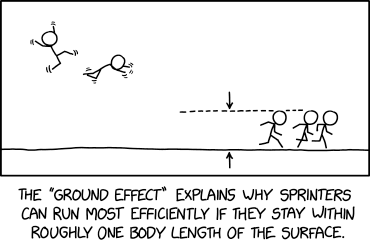
Ground Effect

XKCD · view →
Runners looking for aerodynamic advantage typically wear sneakers because some fancy dress shoes can create wingtip vortices.

Runners looking for aerodynamic advantage typically wear sneakers because some fancy dress shoes can create wingtip vortices.