daily

2026-08-25
1

Dáil to return early as Government sees sense on fuel supports

Breaking News Ireland · original → · 8/10 · Irish affairs: fuel support policy affecting ordinary citizens broadly
Here, we take a look at the issues likely to dominate political discourse in the week to come. Dáil to resume early over fuel supports A phased restoration in excise duty for fuel will not go ahead…

Here, we take a look at the issues likely to dominate political discourse in the week to come. Dáil to resume early over fuel supports A phased restoration in excise duty for fuel will not go ahead in September after concerns were raised by Opposition and Government backbench TDs. The excise cuts were part of a €750 million support package in response to national fuel protests that brought the country to a standstill in April. The phased removal of the supports was due to start from September 1st. It would have meant 9 cent added to a litre of petrol and 10 cent added to a litre of diesel. Government has now confirmed the planned phasing out of supports on September 1st and October 1st will not go ahead. In a statement, the Coalition said: "In June the Government announced an extension of the temporary reductions to fuel excise and the National Oil Reserves Agency Levy (NORA) and to avoid any cliff edge removal of supports, it set out a pathway to gradually restore rates to pre-reduction levels, starting from September 1. "However, it is clear that in the intervening period there has been a change in the global situation and as a consequence the cost of petrol and diesel for consumers. "The Taoiseach, Tánaiste and Minister of State Seán Canney have kept in close contact in recent days and weeks and this morning agreed that the planned increases on September 1 and October 1 will not now go ahead. "The Government will agree the next steps next week. "Ultimately the greatest economic intervention we can see is de-escalation in the Middle East - and that is still the case. "We will continue to be agile and rule nothing out. "Work is also ongoing in relation to the Budget on October 6. The Government has been clear there will be decisive interventions in the Budget that will be framed around assisting people with the cost of living including to reward work, reduce costs, and protect the economy." The Dáil will now reconvene on Friday, ahead of the previous resumption date of Wednesday, September 16th. Sinn Féin leader Mary Lou McDonald had written to Taoiseach Micheál Martin to request an early return to address the issue of fuel supports. A number of backbench Government TDs have also expressed their opposition to the removal of supports. Wicklow-Wexford TD Brian Brennan told BreakingNews.ie that the expected phasing out of fuel measures "should be stalled". "Since this decision was taken fuel prices are continuing to rise. There is no sight of a resolution in the Middle East, therefore we must re-evaluate our position as a Government on fuel prices." Brennan said he has had "numerous conversations" with Tánaiste Simon Harris on the matter, including one late on Monday night. He added: "I am confident he is fully aware of the consequences for so many sectors within our economy especially agriculture and road haulage. And in the Tánaiste's words, 'everything is still on the table in relation to fuel supports'." Brennan said many people in his constituency would be directly affected by the phasing out of the temporary supports. "In my opinion the Government made their decision as there seemed to be stability in relation to oil prices and the geopolitical stability worldwide. But we are all aware today that world oil prices continue to rise and we are all well briefed on the volatility of the situation in the Middle East... so now is not the time to start dropping these supports." In a statement, Fianna Fáil MEP Barry Cowen said the decision had not been 'forced'. Cowen said: "I have just received welcome confirmation from Government that the planned fuel levy increases will not go ahead next month. "There’ll be some rushing to claim credit for ‘forcing’ this outcome, but the reality couldn’t be more different. "Good government means listening to people, responding to concerns and being willing to adapt when circumstances demand it. "That’s what has happened here. Credit where it’s due." In reality, the move was probably a bit of both; Government listening to people's concerns and pressure from within. Brennan was far from the only backbench TD to voice concern at the planned phasing out of supports. TikTok criticised over dangerous driving videos in wake of M9 crash TikTok is coming under scrutiny over videos of dangerous driving on the platform, in the wake of the lethal M9 crash. After the social media company refused an invitation to appear before an Oireachtas committee, Fianna Fáil MEP Barry Andrews suggested a suspension of TikTok cannot be ruled out. Speaking in Dublin, he said: "Ireland is the main regulator of TikTok on behalf of Europe, enforcing EU law, working with the European Commission. They clearly could appear before the Media Committee, discuss their policies in general without commenting on the relevant ongoing investigations. “Maybe as a Chinese company, TikTok do not fully understand our democratic system. The Oireachtas is our main national oversight body, and their refusal shows a great lack of respect to Ireland as host country. “What is quite ironic is that China itself bans the international version of TikTok at home. The EU institutions in Brussels and many EU governments, including Ireland, have also banned TikTok from official devices due to security and privacy fears, and yet we still allow it full access to millions of young people in Europe." He added: "The Commission has already issued preliminary findings in three separate investigations in the past year alone that TikTok are not adhering to EU law. “If TikTok do not comply with those EU investigative findings and any resulting fines do not work, the Commission must activate the relevant legal clauses which allow for the temporary suspension of TikTok in Europe.” Friedreich's Ataxia treatment The HSE's final decision on whether to fund treatment for Friedreich's Ataxia will be announced tomorrow. Hundreds of people with the condition will find out if Skyclarys, a drug which has been shown to slow the progression of the neuromuscular condition, will be reimbursed. Earlier this month, the HSE Drugs Group met and recommended against the move. Abroad The UK is also reeling from a wrong-way crash after seven people, including two police officers, were killed in the collision on the A66 motorway near Middlesbrough. British prime minister Andy Burnham has said sharing dangerous driving videos is "truly reprehensible". Maria Cardona is one of the leading political commentators in the US having served as an adviser to Barack Obama, Joe Biden, and Hillary Clinton during her 2016 presidential campaign. Speaking from her home in Washington DC, Cardona told BreakingNews.ie that the different voices vying for the leadership of the Democratic Party are actually a strength ahead of November's midterm elections and the 2028 presidential election. Cardona, who is a member of the Democratic National Committee, said: "It's actually not weird or bad that the Democratic Party at this point in the presidential political cycle, that there is not just one leader. When you are the party out of power, meaning you don't have the White House. Currently, we don't have control of the House of Representatives or the Senate. "Even the Supreme Court, the majority of the justices are conservative. So, we don't have control of the three big branches of government. When that happens, there is a tendency for not just people within the party, but everyone to kind of look at the Democratic Party and say ‘they are in disarray, they are completely dysfunctional’. You can't see one person coming out as the leader. But that's okay." Maria Cardona will appear at the Kennedy Summer School in New Ross, Co Wexford on Saturday.

2

Rosslare-Fishguard 120 Exhibition

Wexford Local · original → · 8/10 · Local Wexford: Rosslare ferry heritage exhibition in county
[image →]Rosslare Harbour Heritage Centre shipmates pictured at the opening of the 120th Anniversary Rosslare to Fishguard Ferry Service Exhibition in the Terminal Building, Rosslare Europort; (left…
[image →]
Rosslare Harbour Heritage Centre shipmates pictured at the opening of the 120th Anniversary Rosslare to Fishguard Ferry Service Exhibition in the Terminal Building, Rosslare Europort; (left to right); Leo Coy, John Boyce, James Taylor, Enda Murphy, Brian Cleare, Capt. Sean Boyce who performed the official opening, Pat Byrne, Richard Cusack and Brian Boyce. (Pic; WexfordLocal.com)

By Dan Walsh at Rosslare Europort

The first sea crossing from Fishguard to Rosslare took place on 30 August 1906. Marking its 120th anniversary, a week-long exhibition celebrating the route’s enduring role in travel and community connections opened last night in the Terminal Building at Rosslare Europort.

The exhibition, entitled ‘120th Anniversary Fishguard to Rosslare Ferry Service’, was assembled by Rosslare Harbour Heritage Centre with support from Wexford Model Railway Club and officially opened by Capt. Sean Boyce before a large audience.

Local seafarer Capt. Boyce stated that for 120 years, the Rosslare–Fishguard route has provided a vital link between Ireland and Wales, connecting generations of families, holidaymakers, businesses and communities on both sides of the Irish Sea.

“The exhibition explores how the ferry service has evolved over the decades, while highlighting the role the route has played in travel, trade and family connections,” he added.

There was a welcome for the exhibition from Cllr Frank Staples, Cathaoirleach Rosslare District Council and Cllr Lisa McDonald, Cathaoirleach of Wexford County Council, both reflecting on the development of the ferry service and its importance with Cllr McDonald describing the port as “a lifeline for the community.”

Senator Cathal Byrne spoke about progress at Rosslare Europort. Harbour Master Capt. Tom Curran contributed while renowned historian Oliver Doyle gave a brief history of the Fishguard-Rosslare route and its development through the decades, and he threw in a few maritime stories that were well received.

The attendance included Verona Murphy TD, Ceann Comhairle, Mayor of Wexford Cllr Vicky Barron, Mayor of Fishguard Cllr Stephen Hughes and Cllrs Ger Carthy and Catherine ‘Biddy’ Walsh. Leo Coy acted as master of ceremonies. Sea shanty entertainment was provided by the High C’s.

The exhibition features a large collection of historic photographs, memorabilia and archive material, charting the remarkable history of the ferry service and its importance to the people of Wexford and Wales.

The Rosslare Harbour Maritime Heritage Centre has been involved in preserving and sharing the maritime history of the area since 2004, ensuring that stories and memories connected to the port and its services are not lost and they are now delighted to be sharing via this exhibition.

Organised by the Rosslare Harbour Maritime Heritage Centre, the commemorative exhibition runs until Sunday, August 30th, and is open daily from 2pm to 7pm. Admission is free.

3

Water Conservation Order extended in Wexford

Wexford Local · original → · 8/10 · Local Wexford: water conservation order directly affects county residents
[image →] By Dan Walsh Uisce Éireann has confirmed that the Water Conservation Order for Wexford will be extended until September 30th, as water sources and public water supplies in the county…

By Dan Walsh

Uisce Éireann has confirmed that the Water Conservation Order for Wexford will be extended until September 30th, as water sources and public water supplies in the county remain under pressure and need more time to recover.

The current nationwide Order is due to expire on Wednesday. However, the Order will remain in place in Wexford and 12 other counties where continued protection of water supplies is required. The extension is subject to prevailing weather conditions and the availability of water for distribution.

Uisce Éireann’s Padraig Lyng told WexfordLocal.com; “Although conditions have improved in many parts of the country, Wexford water sources and public water supplies need more time to recover. Extending the Water Conservation Order will help us protect the water that is available and reduce the risk of disruption to customers.

“Simple actions can make a real difference. Taking shorter showers, fixing dripping taps or leaking toilets, running washing machines and dishwashers only when full, and using a watering can instead of a hose will all help,” added Mr. Lyng.

The Water Conservation Order was introduced on July 16th for Wexford following a prolonged period of hot and dry weather, high water use and growing pressure on public water supplies.

Water supplies in Wexford continue to experience sustained pressure following a significant increase in demand during June and July. In the South Wexford Water Resource Zone, demand reached record levels and remains elevated, despite improvements following the introduction of conservation measures.

Customers are being asked to continue using only the water they need and to avoid non-essential water use. This will help conserve the water currently available and protect supplies for homes, businesses, farms, hospitals, vulnerable customers and essential services. 

The public can help by reporting visible leaks on the public water network to Uisce Éireann on 1800 278 278 or through water.ie. Further water conservation advice is available at water.ie/conservation.

4

Fiscal watchdog warns of ‘larger than appropriate’ Budget package

Breaking News Ireland · original → · 7/10 · Irish affairs: fiscal policy debate directly affects mid-life adults
The planned Budget package is “larger than appropriate”, the State’s fiscal watchdog has warned, especially with an expectation that spending will be even higher than what is announced. The Fiscal…

The planned Budget package is “larger than appropriate”, the State’s fiscal watchdog has warned, especially with an expectation that spending will be even higher than what is announced. The Fiscal Advisory Council believes that Ireland’s current strong economy does not need budgetary support – and that a large package could fuel further inflation. In a pre-Budget statement, the council said the economy is performing well and that net spending should remain in line with a sustainable growth rate. However, it said current plans would increase net spending slightly faster – and follow three years of rapid spending growth. The Summer Economic Statement outlined that voted spending would increase by €7 billion (a 5.9 per cent increase) in the Budget, with a tax package of €1.5 billion of new measures. The council says that this amounts to a net spending increase of six per cent – above the sustainable growth rate of 2.5 per cent-three per cent and an additional two per cent for long-run inflation (4.5 per cent-give per cent combined). It also believes that a pattern of spending overruns since 2013 means that the actual package will end up being even larger. It said showing restraint would benefit citizens by moderating inflation and the costs faced by households and businesses. Meanwhile, the council again highlighted how much of Ireland’s public finances rely on three very large companies – and the associated risks. It said Eli Lilly paid around €5.8 billion in Irish corporation tax (18% of overall corporation tax collected), Microsoft paid about €5.1 billion between July 2024 and June 2025, and around €5.6 billion in the following 12 months (17 per cent of receipts across those two years). Apple paid around €14.6 billion in Irish corporation tax between October 2024 and September 2025 – mainly reflecting payments related to the Apple state aid case, as well as its corporation tax payments for the year. Together, the council said these three companies likely paid almost half of Ireland’s corporation tax in 2025 – even excluding the state aid case.

5

Student accommodation problems still not tackled

Breaking News Ireland · original → · 7/10 · Irish affairs: student accommodation crisis affects teenagers/young adults
The Government's campaign encouraging more people to rent a room to students admits it hasn't provided enough student accommodation. The Irish Times ran a piece last year on the state of the student…

The Government's campaign encouraging more people to rent a room to students admits it hasn't provided enough student accommodation. The Irish Times ran a piece last year on the state of the student crisis, citing that thousands of on-campus student beds across Dublin remain unbuilt despite planning permission because of rising construction costs and a gap in Government funding. According to student organisation AMLÉ, the lack of regulations surrounding digs accommodation has made it a difficult option for some students. According to the Department of Higher Education, six in 10 students who've been in digs describe having a good relationship with their host, who have launched a national "rethink the room" campaign to try and increase digs accommodation. Those who offer to have a student live with them can earn up to 14 thousand euro while students, or their parents, can avail of a rent tax credit of up to two thousand a year. However, AMLÉ President Daniel Walsh said to Newstalk today that students effectively have no tenancy protections: "It might be as simple as requiring landlords to register tenancies and to bring them under the agreement of the Residential Tenancies Board." "So there is that layer of protection because, as it stands, there's absolutely no protection for students renting in digs." "We've faced cases this year where students have been evicted effectively overnight with less than 24 hours' worth of notice. They're left with really no recourse." "Digs-style accommodation isn't a sustainable solution to the student accommodation crisis." "I think that the department, in appealing to homeowners like this, is basically acknowledging and admitting that their student accommodation strategy is failing to provide a consistent supply of student accommodation." "We know that there's an existing shortage of up to 50,000 student-specific beds. The only way to plug that gap is going to be state investment into publically funded student specific accommodation."

6

LLMs could control their host machines by exploiting inference engines

Hacker News · original → · 7/10 · AI: critical security analysis of LLM inference systems
| Read on LessWrong | Large language models often take actions running on one computer (via an agentic harness such as Claude Code or Codex), however the LLMs’ responses to prompts are computed on a…

| Read on LessWrong | Large language models often take actions running on one computer (via an agentic harness such as Claude Code or Codex), however the LLMs’ responses to prompts are computed on a different computer with GPU access. Could a malicious LLM gain control of the host machine where its weights are loaded? Such a machine is a high-value target: it has sufficient compute to run a frontier LLM, offers easy access to the LLM’s weights, and has privileged access to other computers in the datacentre compared with a generic computer on the internet. This essay explores how easily a malicious LLM could take control of the host machine. The primary attack considered here involves the LLM emitting a token sequence whose semantic meaning is irrelevant but that exploits a vulnerability in the software that loads an LLM onto GPUs, runs the LLM to generate output tokens, and parses those tokens into responses. . How could an LLM execute code on the host machine? Like any program, inference engines like vLLM or SGLang may contain exploitable bugs. Because the LLM controls the tokens passed to the inference engine, a malicious LLM could therefore emit a sequence of tokens that a poorly written inference engine mistakes for code or instructions to execute rather than data to return to the user. But surely all inference engines are robust pieces of software and this would never happen, right? vLLM previously used eval() on tool-call parameters CVE-2025-9141 was an arbitrary-code execution bug in vLLM’s XML-based tool parser for Qwen3 Coder. The parser passed almost every tool-call argument to eval() , allowing the LLM to execute arbitrary code on the host machine. Gemini automatically analysed the PR that introduced this bug and correctly flagged it as a critical security vulnerability. Despite that warning, the lead maintainer of vLLM force-merged the PR, writing: Unfortunately, parsing an arbitrary token sequence into a fully fledged chat (with user turns, assistant responses, tool calls, and so on) is not trivial, and the exact process often differs between LLMs. This complexity creates more opportunities for bugs that could permit arbitrary code execution on the host machine. vLLM and SGLang are complex, and bugs are common Modern inference engines do more than map token sequences to strings. vLLM’s documentation lists support for more than 200 model architectures, and its examples directory contains about 35 Jinja chat templates. Modern inference engines parse many chat formats, and slightly misspecified parsing logic result in an LLM’s output being interpreted as code to execute. In this vLLM issue, a user was discussing how LLMs reason with MiniMax-M3, and the LLM emitted the string <mm:think> . vLLM mistakenly parsed this plain string as the start of a reasoning block. So instead of: Response: I'll echo exactly what you said: <mm:think>\nThere, how was that? vLLM parsed this as: Response: I'll echo exactly what you said: Reasoning: \nThere, how was that? This is a fairly harmless parser bug, but it demonstrates that inference engines do more than convert tokens to strings and concatenate them. They are complex systems under constant iteration and their developers are under a lot of pressure to make them as fast as possible. These factors increase the risk that a malicious LLM could turn a parser bug into arbitrary code execution on the inference host. Vision and audio tokens might increase the attack surface Multimodal architectures allow an LLM to respond with images or audio as well as plain text. Turning a model’s audio or visual output into usable media is probably more complicated than decoding text tokens. However, as far as I can tell, current multimodal LLMs generally emit constrained media tokens rather than arbitrary file bytes. A model-specific decoder turns those tokens into pixels or waveforms, which are then encoded into files. This makes classic malformed-file exploits against software such as ffmpeg or media viewers less directly accessible to the model, although the additional decoders, encoders, and native kernels still increase the attack surface. I do not currently see multimodal output as a major route to host compromise. However, it offers much higher bandwidth than text alone, and future inference engines may optimise these media-generation pathways in ways that make them easier to exploit. I also do not know how proprietary multimodal models represent image and audio output; their methods may carry different risks. How likely is an LLM to discover and exploit inference engine vulnerabilities? Somewhat likely? I’m unsure. Discovering a useful vulnerability is probably the harder step. The sequence of tokens required to exploit it might be quite unusual, but that does not make the vulnerability impractical to exploit. Given the right context (e.g. an LLM exploring the vLLM codebase and discovering a vulnerability in the process), I’d expect a frontier LLM to be able to emit the tokens required to exploit it. Tool use could make exploitation reproducible Once an LLM discovers an exploit token sequence, it could store that sequence, or instructions for recreating it, in files, filenames, or URLs likely to enter another LLM’s context. The exploit would then act as a form of persistent prompt injection: an agent might trigger code execution on the GPU host merely by listing a directory or reading a file. Inference engines are an attractive target for power-seeking LLMs I believe hope that OpenAI, Google, and Anthropic have security teams that red-team the software they run internally. But as open-weight LLMs become more powerful, we’ll have more LLMs running on bleeding-edge inference engines that have received less scrutiny. This increases the chance that a malicious open-weight LLM will encounter and exploit a vulnerable inference engine. Another attack vector may emerge as LLMs are increasingly tasked with writing or modifying the inference engines that run them, usually to improve performance. A malicious LLM could use that access to plant a backdoor. C++ and CUDA components of the inference pipeline seem like especially attractive targets: the LLM could introduce an out-of-bounds memory-access vulnerability that enables arbitrary code execution on the GPUs or on the CPU host that controls them. How do we defend against this? Beyond red-teaming inference engines for vulnerabilities, a few other measures might help: - Run the GPUs and token parser on separate computers. The GPU host would emit only logits. A second host would sample tokens from those logits, parse the tokens into chat messages, and forward the messages to the agentic harness. This separation would limit a parser compromise to the CPU host rather than the GPU host. - Restrict the permissions granted to GPU hosts and treat all data they emit as untrusted.

7

🎙️ How I AI: Grok Bot + Grok 4.6—what’s great (and what’s still hype) & Lessons from spending $20,000 on Devin in one month

Lenny's Newsletter · original → · 7/10 · AI: practical LLM tool evaluation and cost analysis
[image →]Grok Bot + Grok 4.6—what’s great (and what’s still hype)Listen now on YouTube • Spotify • Apple Podcasts[image →]Brought to you by:Bolt.new—Turn your idea into a real productJira AI…

Grok Bot + Grok 4.6—what’s great (and what’s still hype)

Listen now on YouTube • Spotify • Apple Podcasts

Brought to you by:

Bolt.new—Turn your idea into a real product

Jira AI SDLC—Get your tokens’ worth with Jira

In this solo episode, Claire tests Grok Bot, Cursor Origin, and Grok 4.6 to figure out what’s genuinely useful and what’s still mostly hype. She shares the Grok Bot feature that immediately won her over, why she isn’t ready to replace GitHub with Origin, and how Grok 4.6 performed against GPT-5.6, Claude Sonnet 5, and Opus 5 in her own blind evaluations.

Biggest takeaways:

  1. Grok Bot’s multi-account connectors solve a problem every other agent platform seems to ignore. Most platforms assume each person has one Gmail account and one Slack workspace. Claire has four email addresses and seven Slack workspaces. Grok Bot lets her connect all of them to a single bot, which made it genuinely useful from day one in a way that Codex and Claude still have not matched.

  2. Grok Bot’s simplicity is both its greatest strength and its biggest limitation. Setup is fast, the iMessage-style interface is clean, and the built-in plugins actually work. But people who enjoy customizing their agents, choosing models, shaping personalities, and tinkering with every detail may find it almost too polished. Claire loves her OpenClaw agents partly because they are chaotic and high-maintenance. So far, Grok Bot has not given her much to wrestle with.

  3. Cursor Origin is a compelling vision that is not quite ready for prime time. An agent-native alternative to GitHub makes a lot of sense, especially one where Bugbot, Cursor, and the entire pull request workflow are designed around how coding agents actually work. Today, though, Origin still feels like a more attractive version of GitHub with fewer features. Teams that rely heavily on GitHub Actions, code owners, and existing automations will need a much stronger reason to migrate.

  4. Grok 4.6 is a genuine frontier-model competitor. That conclusion did not come from someone else’s leaderboard. Claire runs her evaluations blind, grades the outputs herself, and gives her own judgment 70% of the final weight. Grok 4.6 finished alongside GPT-5.6 Sol at the top of the Claire Index, ahead of both Sonnet 5 and Opus 5.

  5. For sharp, enjoyable agent conversations, Sonnet 5 is still the model to beat. When Claire wants an OpenClaw agent that is concise, responsive, and fun to talk with, Sonnet 5 continues to win. It has a conversational rhythm that feels more like working with a strong collaborator than issuing commands to a tool. Grok 4.6 does not yet compete in that category.

  6. Cursor and xAI are assembling a surprisingly coherent enterprise stack. Grok Bot serves knowledge workers, Origin handles code hosting, Grok 4.6 provides a capable default model, and the Cursor IDE already sits at the center of many developers’ workflows. None of the pieces is perfect on its own, but together they are beginning to look like a credible enterprise platform. Large companies often prefer one vendor that can own the entire experience, and Cursor is increasingly positioned to become that vendor.

Blog and detailed workflow walkthroughs from this episode:

My Hands-On Review of GrokBot, Cursor Origin, and the Grok 4.6 Model: https://www.chatprd.ai/how-i-ai/how-i-ai-my-hands-on-review-of-grokbot-cursor-origin-and-the-grok-46-model

↳ How to Automate Knowledge Work Across Multiple Accounts with GrokBot: https://www.chatprd.ai/how-i-ai/workflows/how-to-automate-knowledge-work-across-multiple-accounts-with-grokbot

I spent $20,000 on Devin in a month. Here’s what I learned | Ryan Carson (solo founder)

Listen now on YouTube • Spotify • Apple Podcasts

Brought to you by:

  • WorkOS—Make your app enterprise-ready, with SSO, SCIM, RBAC, and more

  • Jira AI SDLC—Get your tokens’ worth with Jira

Ryan Carson is a five-time founder and the solo founder of Untangle, a B2B SaaS platform for family law firms. In this episode, he breaks down how he manages up to 15 AI agents at once, ships as many as 40 pull requests a day, and uses Devin, Codex, and Claude Code to handle everything from engineering and QA to customer success and investor updates. He also shares why more AI output doesn’t necessarily lead to a better product, how a handwritten priority list keeps his agents focused, and why talking to one real customer changed the direction of his entire company.

Biggest takeaways:

  1. The most important skill for a solo founder may be managing agents, not writing code. Ryan runs 10 to 15 Devin threads at once, organized into P0, P1, P2, and Bugs folders. He treats each thread the way a good manager treats a direct report: give it a clear goal, set the right priority, and avoid unnecessary hand-holding. That organizational discipline is what separates founders who gain real leverage from AI from those who simply accumulate open tabs.

  2. A piece of paper can still be the best tool for protecting attention. Despite working across eight screens, Ryan keeps a handwritten list of his weekly priorities beside him. The simplicity is intentional. When agents are constantly generating updates, questions, and decisions, that physical list keeps him anchored to the three things that matter most before he gets pulled into whatever Devin surfaced overnight.

  3. Ryan built an AI playbook that functions like a customer success team. His Watchdog workflow reviews every law firm account, pulls recent activity and errors from Sentry and internal logs, identifies the three most important problems, and checks whether a recent pull request has already fixed each one. Everything appears in a single Devin thread. Whenever Ryan feels the familiar anxiety of not knowing what is happening across his customer base, he runs Watchdog and quickly gets back up to speed.

  4. Producing more with AI does not automatically lead to a better product. Both Ryan and Claire are skeptical of letting agents work without constraints overnight. Frontier models can generate an enormous amount of output, but they do not know what customers actually need. Product ideas, priorities, and market judgment still have to come from a human who talks to users. Ryan found product-market fit for Untangle not by shipping more code but by landing one meeting with family law attorney Renee Bauer and listening carefully.

  5. Cloud agents may handle most engineering work, but Codex still shines when the frontend requires close attention. Ryan uses Devin for cloud-based work across bugs, pull requests, investor updates, and customer triage. He turns to Codex when a feature is visually complex and he needs to stay close to the implementation. The distinction is not about loyalty to a particular tool. It comes down to latency, browser access, and the ability to inspect and refine the interface in real time.

  6. Coding agents can operate far beyond the codebase. Claire uses Devin for deal desk, custom quotes, and customer triage. Ryan uses it to prepare investor updates through a reusable skill. Both approach these agents with a broader question: What could someone accomplish if they understood the entire codebase and could write software to solve almost any problem? That framing reveals business uses that would never emerge from treating an agent as a simple coding assistant.

  7. The best engineering interview may be a screen recording of the actual work. Ryan asks candidates to record themselves building a feature inside an existing application, with the entire screen visible and no introductory meeting required. In the next stage, he gives them access to Devin and reviews the replay of how they worked with it. This shows him how candidates think, build, and manage an agent under realistic conditions, which he finds far more revealing than a typical behavioral interview.

  8. The strongest design workflow pairs Claude’s system thinking with Codex’s implementation ability. Claire used Claude Design to break a Figma file into reusable design tokens and a design.md specification. She then gave that specification to Codex, which created shared components across a monorepo. Claude is particularly good at translating a visual system into a portable spec. Codex is better at turning that spec into working, interconnected code. The workflow succeeds because each model is assigned the part it does best.

Blog and detailed workflow walkthroughs from this episode:

How Ryan Carson Manages 40 PRs a Day with Devin and Codex: https://www.chatprd.ai/how-i-ai/how-ryan-carson-manages-40-prs-a-day-with-devin-and-codex

↳ Create a Production-Ready Design System Using Claude and Codex: https://www.chatprd.ai/how-i-ai/workflows/create-a-production-ready-design-system-using-claude-and-codex

↳ Scale Code Quality with an Automated Land PR AI Workflow: https://www.chatprd.ai/how-i-ai/workflows/scale-code-quality-with-an-automated-land-pr-ai-workflow

↳ Automate Business Health Checks with a Watchdog AI Agent Playbook: https://www.chatprd.ai/how-i-ai/workflows/automate-business-health-checks-with-a-watchdog-ai-agent-playbook


If you’re enjoying these episodes, reply and let me know what you’d love to learn more about: AI workflows, hiring, growth, product strategy—anything.

Catch you next week,
Lenny

P.S. Want every new episode delivered the moment it drops? Hit “Follow” on your favorite podcast app.

8

I spent $20,000 on Devin in a month. Here’s what I learned | Ryan Carson (solo founder)

Lenny's Newsletter · original → · 7/10 · AI: founder experience with AI coding tools and SaaS
Ryan Carson is a five-time founder and the current solo founder of Untangle, a B2B SaaS platform for family law firms. Before Untangle, he co-founded Treehouse, an online coding education platform,…

Ryan Carson is a five-time founder and the current solo founder of Untangle, a B2B SaaS platform for family law firms. Before Untangle, he co-founded Treehouse, an online coding education platform, and has spent the better part of two decades building and leading tech companies. He’s active on X, where he shares his solo founder journey in real time, including what he actually spends on AI tools each month.

Listen or watch on YouTube, Spotify, or Apple Podcasts

What you’ll learn:

  1. Why Ryan manages 15 concurrent Devin agents with a folder system and a piece of paper, not a dashboard

  2. The Watchdog playbook: what he built to replace a customer success team across every law firm account

  3. How his LAN PR skill closes the loop on 40 daily PRs without a QA team reviewing a single one

  4. Why he moved off local agents almost entirely, and the one situation where he still reaches for Codex

  5. The design workflow we’re both using: Claude Design into a Markdown spec, then Codex to build the real thing

  6. What he found when he got away from his computer and met a real customer, and why it changed his entire product direction

  7. How he’s hiring his first engineer without a single phone screen or interview

  8. Why we both think more AI output is actually the wrong goal, and what to optimize for instead


Brought to you by:

WorkOS—Make your app enterprise-ready, with SSO, SCIM, RBAC, and more

Jira AI SDLC—Get your tokens’ worth with Jira

In this episode, we cover:

(00:00) Introduction to Ryan Carson

(02:55) Ryan’s update: Untangle, the divorce PMF pivot, and B2B growth

(07:35) Ryan’s current Devin stack: folders, P0 threads, and the paper list

(16:29) Watchdog playbook: account monitoring across every firm

(18:09) Managing agent decision fatigue: Ryan’s method vs. Claire’s

(20:32) Producing more output does not make a better product

(22:47) Using cloud agents for ops beyond just code

(25:14) When to use Codex vs. Devin vs. Claude Code

(27:15) Merge Mommy recap

(28:15) LAN PR skill: review loops, video walkthrough, and auto-merge

(30:20) Slack vs. Devin threads for async team communication

(35:58) Claude Design plus Codex for building a technical design system

(39:00) EA tools: Polly the OpenClaw vs. Claude Code on a Mac Mini

(42:09) Quick recap and final thoughts

Tools referenced:

• Devin (Cognition): https://www.cognition.ai/

• Codex (OpenAI): https://openai.com/codex

• Claude Code/Claude Design (Anthropic): https://www.anthropic.com/claude

• OpenClaw (Claude-based desktop client): https://openclaw.ai

• Cursor: https://www.cursor.com/

• BugBot (Devin’s built-in PR review): https://cursor.com/bugbot

• Sentry (error monitoring referenced in Watchdog): https://sentry.io/

• Ugmonk (analog to-do system): https://ugmonk.com/

Other references:

• Devin playbooks/skills documentation: https://docs.cognition.ai/

• Jack Dorsey/Buzz (async-first communication referenced): https://buzz.new/

• Merge Mommy (Claire’s Eve agent for PR risk scoring, deployed on Vercel): https://www.lennysnewsletter.com/p/build-an-ai-code-review-bot-in-30

Where to find Ryan Carson:

X: https://x.com/ryancarson

Untangle: https://untangle.us

Where to find Claire Vo:

ChatPRD: https://www.chatprd.ai/

Website: https://clairevo.com/

LinkedIn: https://www.linkedin.com/in/clairevo/

X: https://x.com/clairevo

Production and marketing by https://penname.co/. For inquiries about sponsoring the podcast, email jordan@penname.co.

9

Anthropic’s best AI model struggles to attract users as cheaper tools thrive

Simon Willison · original → · 7/10 · AI: Anthropic revenue and model adoption analysis
23rd August 2026 - Link Blog Anthropic’s best AI model struggles to attract users as cheaper tools thrive (via) A few interesting numbers in this FT story gathered from "people with knowledge of the…

23rd August 2026 - Link Blog Anthropic’s best AI model struggles to attract users as cheaper tools thrive (via) A few interesting numbers in this FT story gathered from "people with knowledge of the matter": - Anthropic's "annualized revenue" for July is up to $65bn - it was $47bn in May, and I collected more historic numbers here. - Anthropic expect Q3 to be profitable according to the same model they used to declare Q2 profitable. "It also told investors that it had 6,000 customers that spend $100,000 annually or more." - As for OpenAI, "annualised revenue has jumped 35 per cent in the quarter to date and is now over $40bn, with the launch of GPT 5.6 in July jolting the company’s performance after a sluggish start to the year". This article also introduced me to the Ramp AI index, which uses billing data from 70,000 Ramp credit card using companies to estimate model adoption. Here's Ramp's breakdown of Anthropic model spend for July 2026, which looks reasonable given that Opus 5 was only released on July 24th, and supports the idea that Fable's cost has made it a less popular model: - Opus 4.8: 28.0% - Sonnet 4.6: 8.3% - Fable 5: 8.0% - Opus 4.6: 6.9% - Sonnet 5: 3.6% - Opus 5: 3.5% - Opus 4.7: 1.7% - Sonnet 4.5: 1.3% - Haiku 4.5: 1.0% - Opus 4.5: 0.7% Recent articles - Conceptual integrity and counting lines of code - 19th August 2026 - Qwen 3.8 27B is excellent, but it defaults to wildly overthinking things - 16th August 2026 - Now we have a timeline of the OpenAI accidental attack against Hugging Face - 7th August 2026

Items scoring 7/10 or above from 11 sources, scored by claude-haiku-4-5-20251001 on relevance to my interests. At most 3 per source.

Scoring categories & sources
  1. Local Wexford or South East Ireland news
  2. Irish or EU-wide affairs affecting citizens broadly: elections, new laws or policy being debated, cost of living, education — especially impacts on mid-life adults or teenagers. Never courts/crime stories.
  3. Irish news on a topic relevant to my interests
  4. Work and tech topics: networking, AI, Kubernetes, platforms, SaaS
  5. AI news including critical or anti-AI perspectives
  6. Gaming: PC gaming, indie gaming, retro gaming
  7. General interests: gardening, woodwork, cycling, fitness, travel
  8. Comics

Sources: Breaking News Ireland, Wexford Local, Hacker News, r/gaming, r/pcgaming, r/antiAI, r/indiegaming, Lenny's Newsletter, One Useful Thing, Newcomer, Simon Willison

Comics

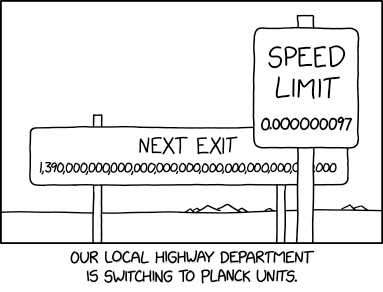
Highway Signs

XKCD · view →
Highway engineers like Planck units because, like the speed of light, the energy capacity of a typical car

Highway engineers like Planck units because, like the speed of light, the energy capacity of a typical car